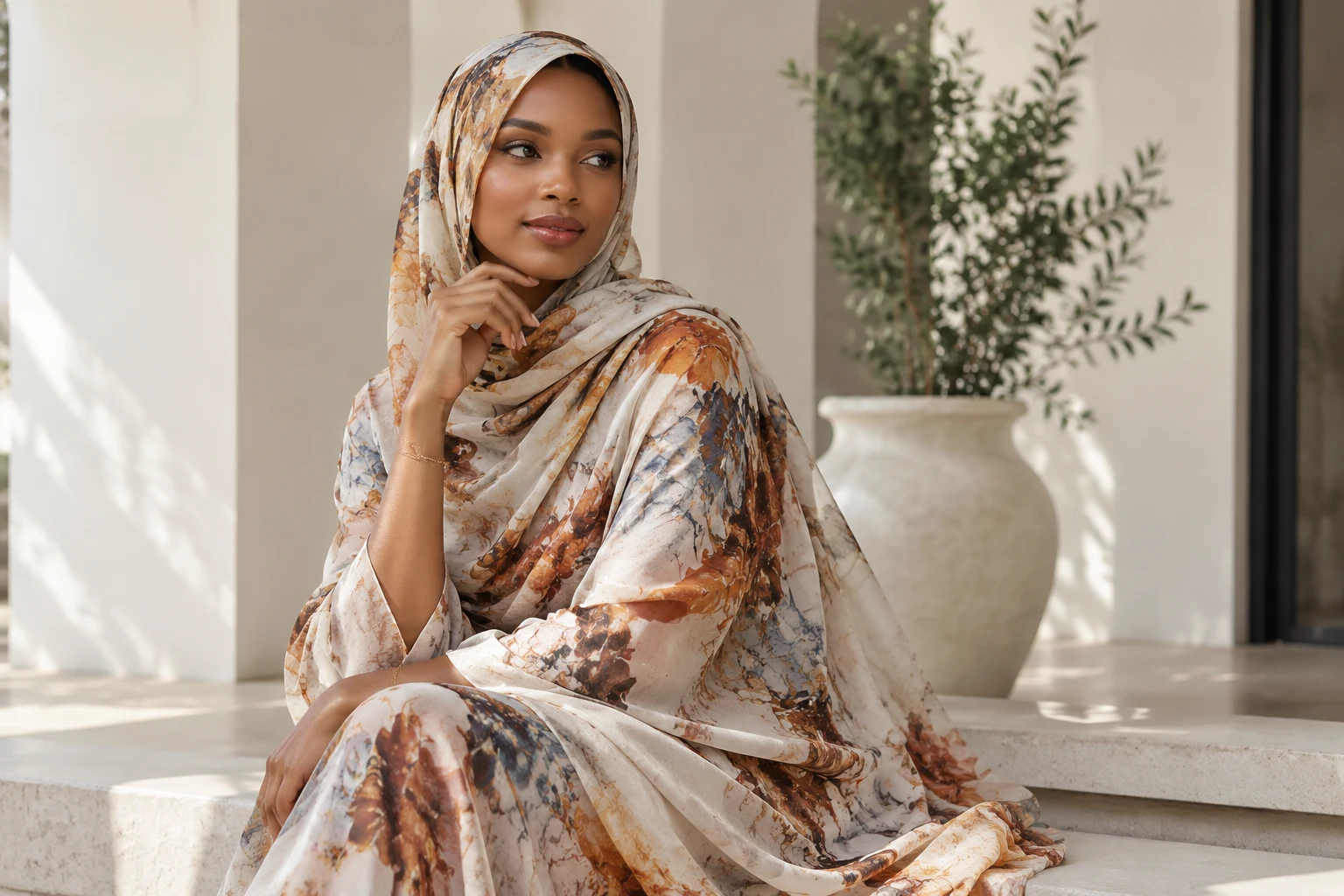
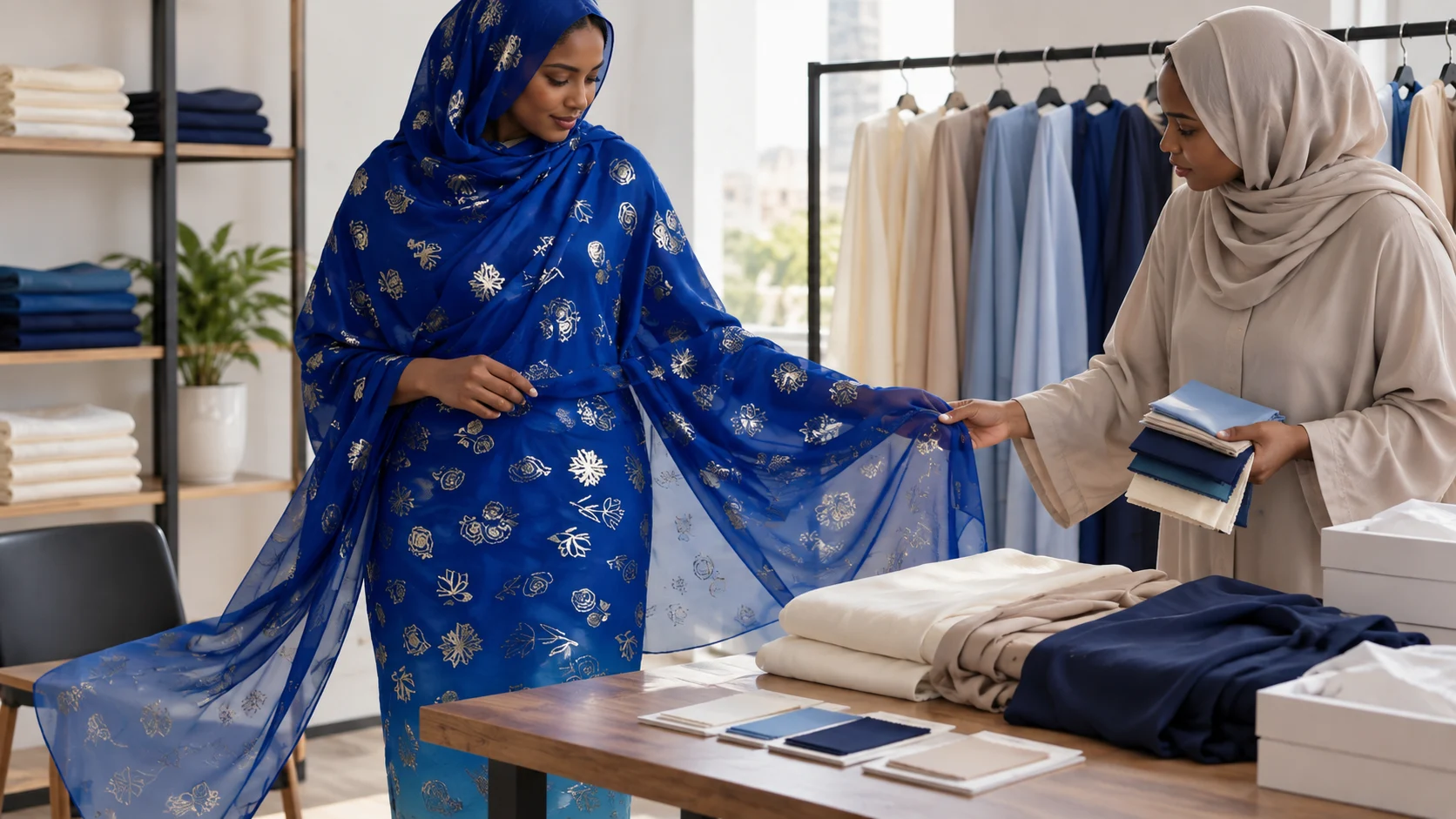
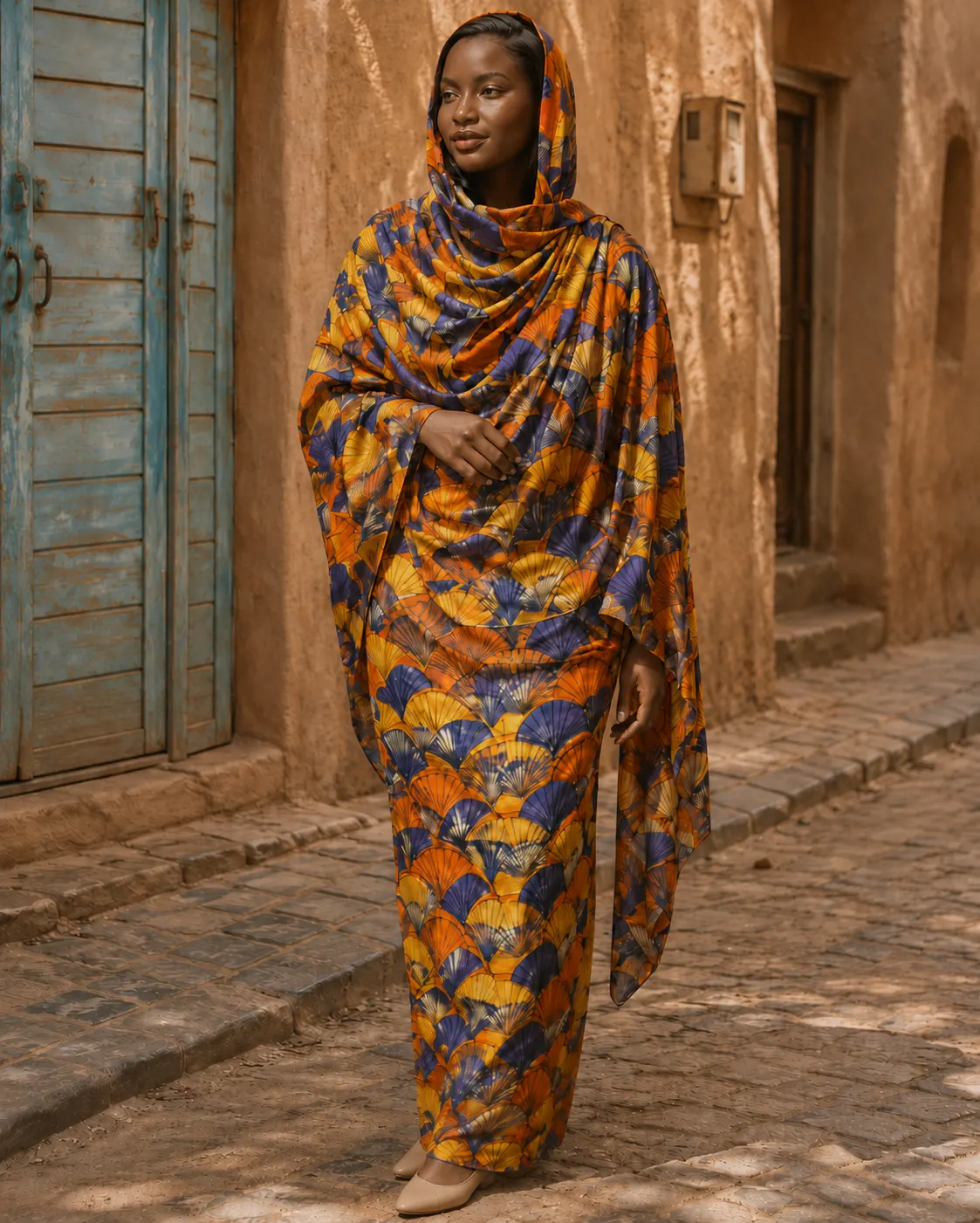
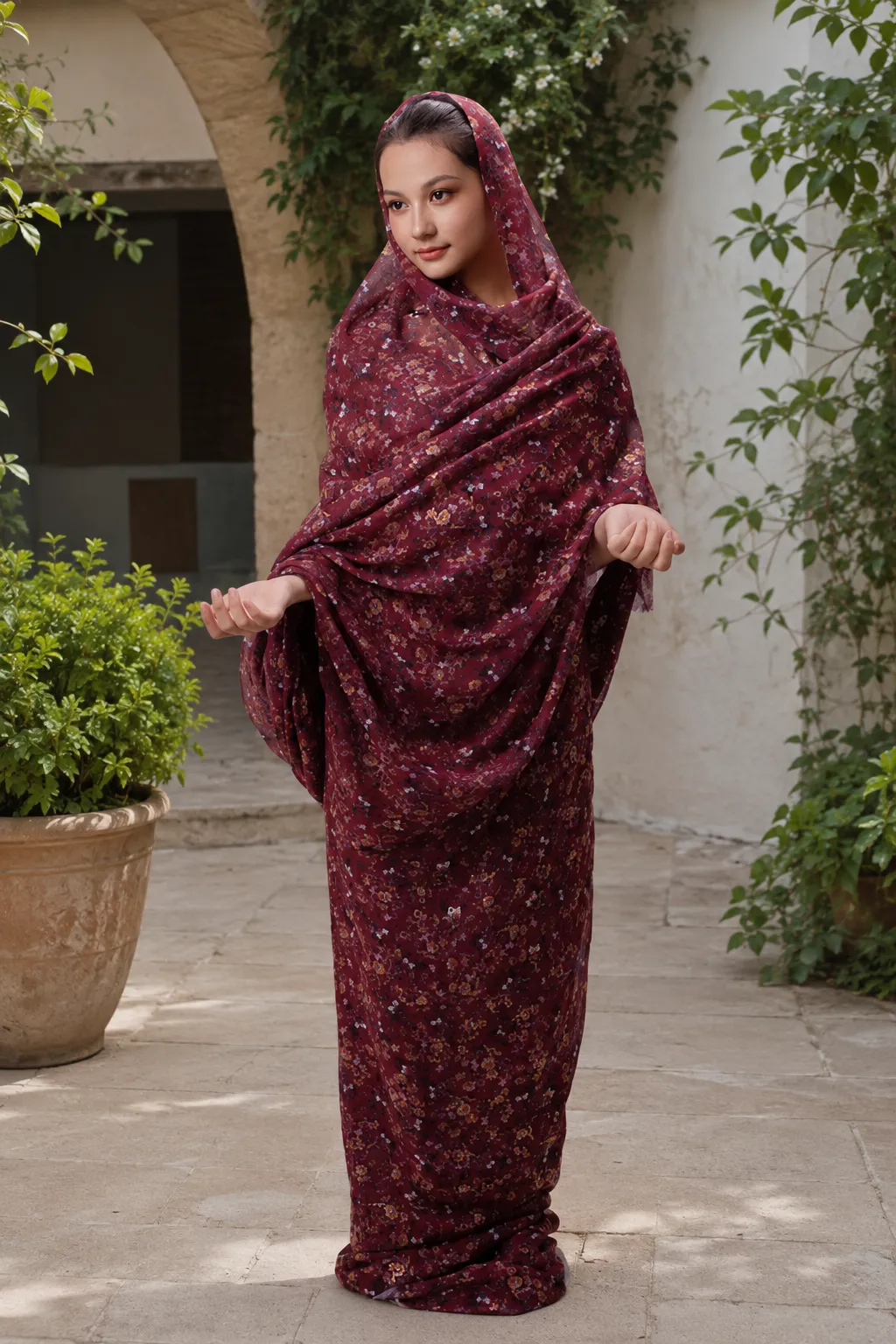
Gold-Stamped vs Plain Sudanese Toub Wholesale: How Buyers Build Core and Premium Collections
When a buyer is building a Sudanese Toub collection, the most useful question is not whether gold stamping or plain design is “better.” The practical question is how each option should work inside the range.
A plain-design Sudanese Toub can provide a dependable core offer, while a gold-stamped Sudanese Toub can create a premium tier for customers who want more visual impact. The right choice depends on retail role, occasion, color plan, sample results, and the level of customization required.
For importers, wholesalers, distributors, retailers, and private-label brands, the safest route is to compare both options as complete pieces before sending a bulk RFQ.
Review the fabric handle, coverage, drape, color, finish placement, and packaging presentation together. Then ask a Sudanese Toub supplier or manufacturer to quote clearly separated core and premium options.
Start with the job each product must do
Plain and gold-stamped Toub should not be treated as two versions of the same retail item. They solve different assortment problems.
Collection role | Plain-design Sudanese Toub | Gold-stamped Sudanese Toub |
Main job | Build a repeatable core range | Create a premium or occasion tier |
Design focus | Color, surface quality, and easy coordination | Metallic placement, motif scale, and light reflection |
Buyer priority | Consistency across colors and reorders | Finish approval and visual impact |
Retail use | Everyday, coordinated, and broad-market selling | Weddings, celebrations, gifting, and elevated capsules |
RFQ emphasis | Base fabric, color references, size, labels, and packing | Base fabric plus stamping artwork, placement, and finish review |
This is a planning framework, not a fixed product rule. A retailer may position a plain piece as premium through color and packaging, while a gold-stamped piece may be offered as an accessible occasion option. The final role should follow the target customer and approved sample.
When a plain-design Sudanese Toub is the better core option
A plain-design route is useful when the collection needs a clear foundation. Without a metallic motif competing for attention, buyers can judge the base fabric, color accuracy, coverage, and movement more directly. This often makes plain styles easier to coordinate across a multi-color assortment or with other modest-fashion products.
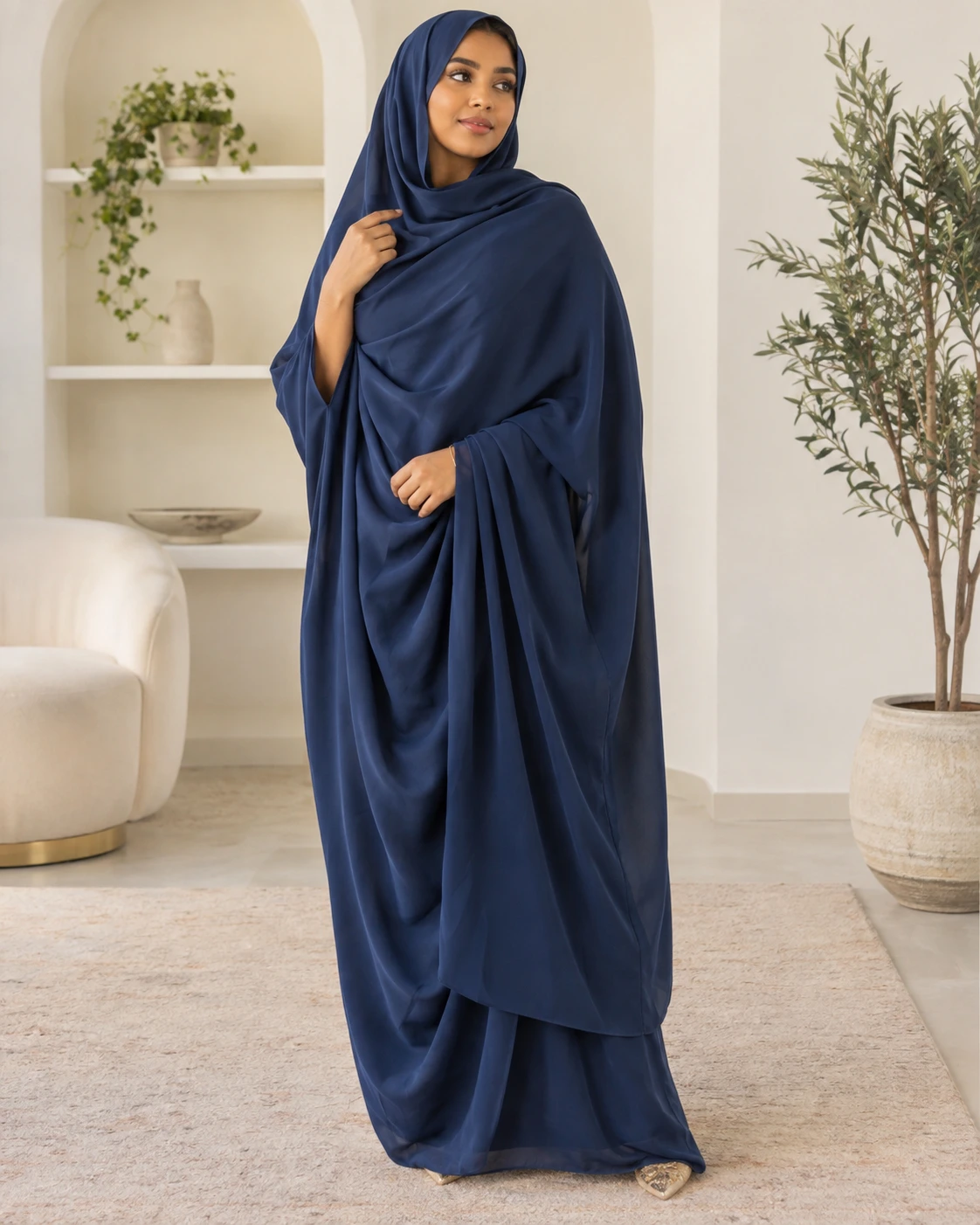
For a wholesale collection, use plain samples to answer four questions:
1. Does the fabric fall in a way that suits the intended wearing style?
2. Does the color match the approved reference under the lighting used by the retailer?
3. Is the coverage and opacity appropriate for the market and price position?
4. Can the edge finish, label, and packaging support the planned retail presentation?
Jinlai Textile lists plain as a design option within its custom Sudanese Toub manufacturing route. That matters for buyers who want a clean base but still need custom colors, patterns, labels, or packaging discussions. The plain route should be specified as a design direction in the RFQ rather than assumed to be one universal, fixed SKU.
Plain does not mean “basic” in every market. A focused color story and careful presentation can make a plain collection look intentional. It also gives the buyer a control sample for judging how stamping changes drape, hand feel, and visual balance.
When gold stamping earns a place in the premium tier
Gold stamping is most useful when the buyer wants a visible statement without changing the entire collection into a heavily decorated range. The metallic detail can be placed as a border, repeat, panel, or selected motif, depending on the artwork and production discussion. Because the finish catches light, the sample must be reviewed in more than one setting.
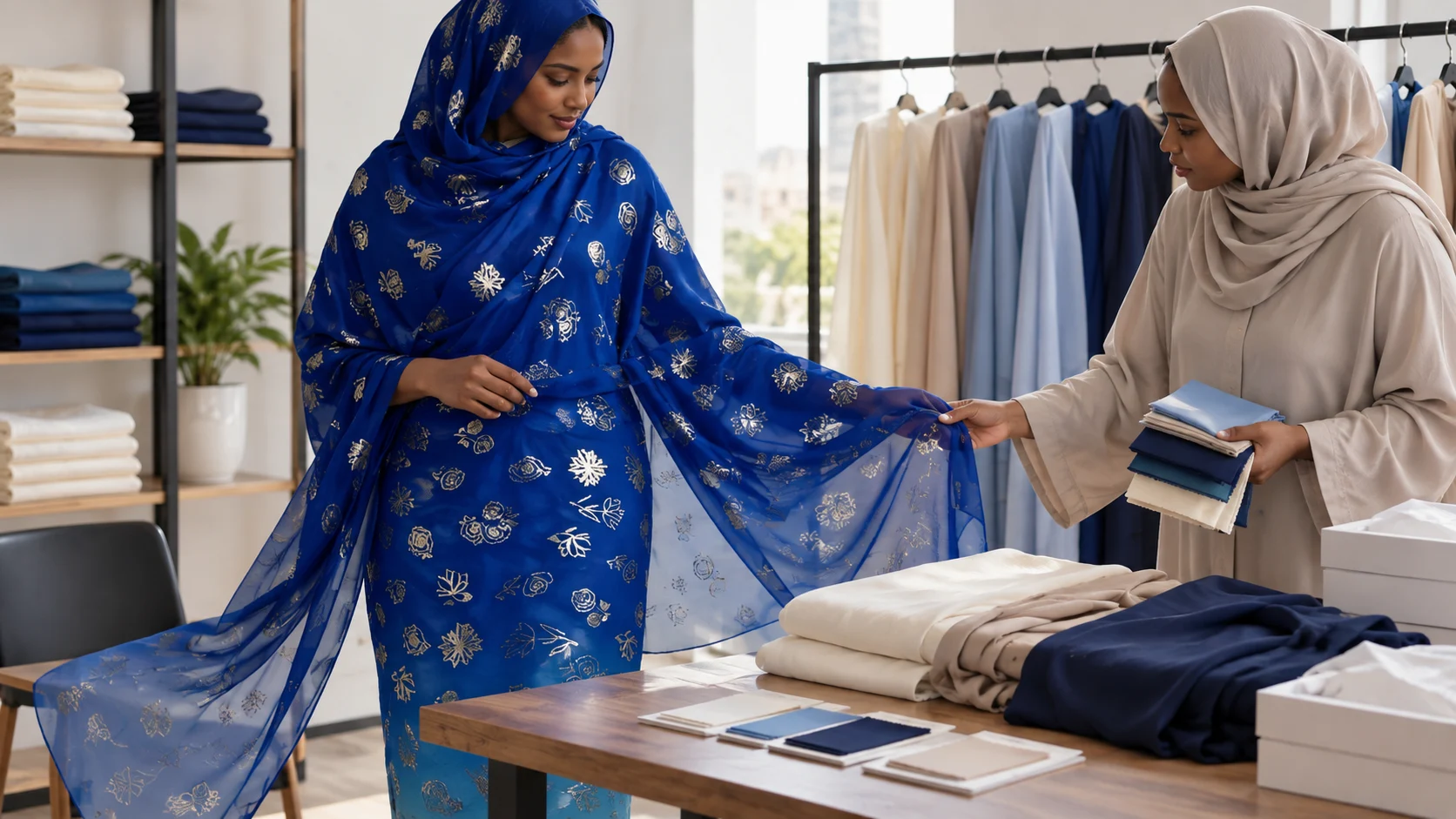
Check the gold-stamped sample under daylight, retail lighting, and the type of photography used for online sales. Look for the relationship between the base color and the metallic area, the scale of the design on a full 150 cm by 450 cm piece when that size is selected, and whether the finish supports the intended folding or draping effect.
Do not approve only a small artwork swatch; a border that looks balanced on a screen can feel too dominant when repeated across the whole Toub.
Jinlai’s high-end Sudanese Toub route is built around gold stamping on voile-based fabric options, with custom design discussion for global modest-fashion buyers.
The useful procurement point is not a promise of one universal finish result. It is the need to approve the actual artwork, placement, color, and complete sample before bulk production.
Compare the two options with one sample scorecard
A simple scorecard keeps the decision commercial rather than subjective. Ask the sampling team to review both routes against the same criteria:
· Drape: Does the fabric move naturally when held, folded, and wrapped?
· Coverage: Is the visual coverage suitable for the intended market and styling?
· Color: Does the shade stay aligned with the approved color reference?
· Surface balance: Does the design leave enough quiet area for the eye to rest?
· Finish placement: Is the border or motif positioned correctly after cutting and folding?
· Retail role: Is the piece clearly core, premium, or occasion-led?
· Branding: Do the label and packaging match the planned customer experience?
Score each criterion with a short note rather than an unsupported number. For example, write “border remains visible after a full wrap” or “plain shade works across three planned outfit stories.” These comments are more useful than a generic “good quality” approval.
Build a two-tier assortment instead of forcing one winner
Many buyers can reduce risk by assigning the two options different jobs within the Sudanese Toub product category. A core tier may use plain designs in a controlled color family. A smaller premium tier may use gold stamping on selected colors or motifs. This creates a visual ladder without requiring every product to carry the same level of decoration.
The two tiers should share a clear brand language through color, border logic, or packaging. Keep their labels distinct enough for warehouse and retail teams to identify them quickly.
A distributor serving several boutiques may need more plain colors, while an event-focused private-label brand may place greater emphasis on gold-stamped styles. Save approved samples and artwork references for future quotations.
Prepare a clear RFQ for a Sudanese Toub manufacturer
An RFQ becomes easier to compare when it separates universal requirements from option-specific details. For private-label development, review the OEM and ODM service alongside the product brief. Include:
1. Product name: plain-design Sudanese Toub or gold-stamped Sudanese Toub.
2. Intended retail role: core, premium, wedding, gifting, or another defined use.
3. Target market and customer profile.
4. Preferred fabric route and the handle or drape the sample should demonstrate.
5. Finished size, if a specific size is required.
6. Color references, artwork files, motif scale, and finish placement.
7. Label, folding, packaging, and carton-marking needs.
8. Sample quantity and approval stages.
9. Quality checkpoints for fabric, color, print or stamping, sewing, and final appearance.
10. Requested quotation basis, shipment terms, and any timing target to be confirmed by the supplier.
Ask the manufacturer to identify which details are confirmed and which depend on sampling. This prevents plain design, gold stamping, and packaging assumptions from being mixed into one vague price request.
Questions to ask before approving bulk production
Ask for a full-size or representative sample, not only a close-up image. Confirm the design position, base-color reference, label, and retail packing. For online sales, request complete-piece and surface-detail images.
For gold stamping, confirm the artwork version, metallic color, placement tolerance, and the care or handling guidance that should accompany the product. Do not write “wash-proof,” “crack-proof,” or another performance promise into your product copy unless the specific claim has been tested and documented for the exact construction.
For plain designs, confirm the approved shade, fabric composition, size, edge finish, label artwork, packaging files, and color reference used for the order.
Where each option can go wrong
Plain styles can look inconsistent when color references are vague or when buyers judge a single sample but do not define acceptable variation for the full order. Gold-stamped styles can lose balance when the metallic area is too dense, the border is misplaced, or online images exaggerate the effect.
Both routes can create avoidable disputes when the RFQ does not identify the approved sample and the inspection reference.
Work with one development path for the collection
Jinlai Textile supports custom Sudanese Toub discussions for wholesale and private-label projects, including design direction, colors, labels, packaging, and OEM/ODM coordination where applicable.
The goal is a workable collection brief: one clear core direction, one premium direction, and a sample process that lets the buyer make a decision before committing to bulk production.
Conclusion
Gold-stamped and plain Sudanese Toub are strongest when they have different jobs in the assortment. Plain design can establish a coordinated core range and provide a useful control sample. Gold stamping can create a premium or occasion tier when artwork, placement, lighting, and complete-piece presentation are approved carefully.
For a reliable RFQ, define the retail role first, compare full samples second, and confirm product-specific details before bulk production. To discuss a core-and-premium Sudanese Toub collection with Jinlai Textile, send the product brief and sampling requirements.
Frequently Asked Questions
Is gold stamping better than plain Sudanese Toub for wholesale?
Neither is automatically better. Plain design usually supports a coordinated core assortment, while gold stamping is often considered for premium or occasion-led products. The better option depends on the target customer, retail role, artwork, color plan, and approved sample.
Can a Sudanese Toub supplier provide both plain and gold-stamped options?
The two routes can be discussed in one collection RFQ, but they should remain separate product specifications. Define the base fabric, color, size, artwork or plain direction, labels, packaging, and sample approval requirements for each option.
What should private-label buyers approve before ordering?
Approve the complete sample, color reference, artwork and placement where relevant, finished size, edge or sewing details, label file, packaging instruction, and the inspection reference. Keep those items together for quotation and production confirmation.
Does gold stamping guarantee a specific care or durability result?
No universal result should be assumed. Care and finish performance depend on the confirmed fabric, process, construction, and documented product requirements. Request product-specific guidance and supporting evidence before making a performance claim in retail copy.
How should I ask a Sudanese Toub manufacturer for a quotation?
State the collection role, target market, product route, fabric preference, size, color or artwork, labels, packaging, sample needs, quality checkpoints, and requested commercial terms. Ask the manufacturer to separate confirmed details from items that depend on sampling or production review.