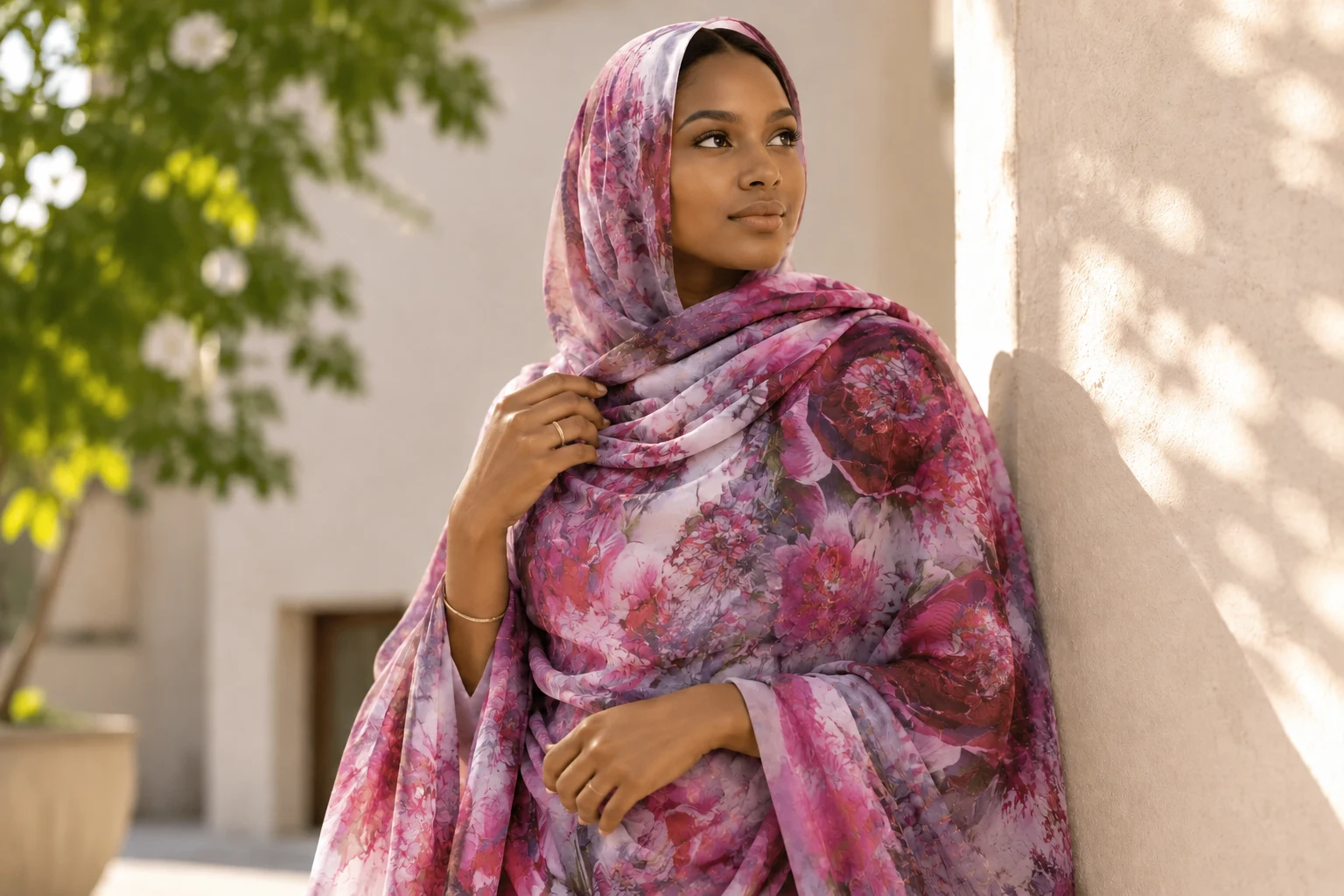
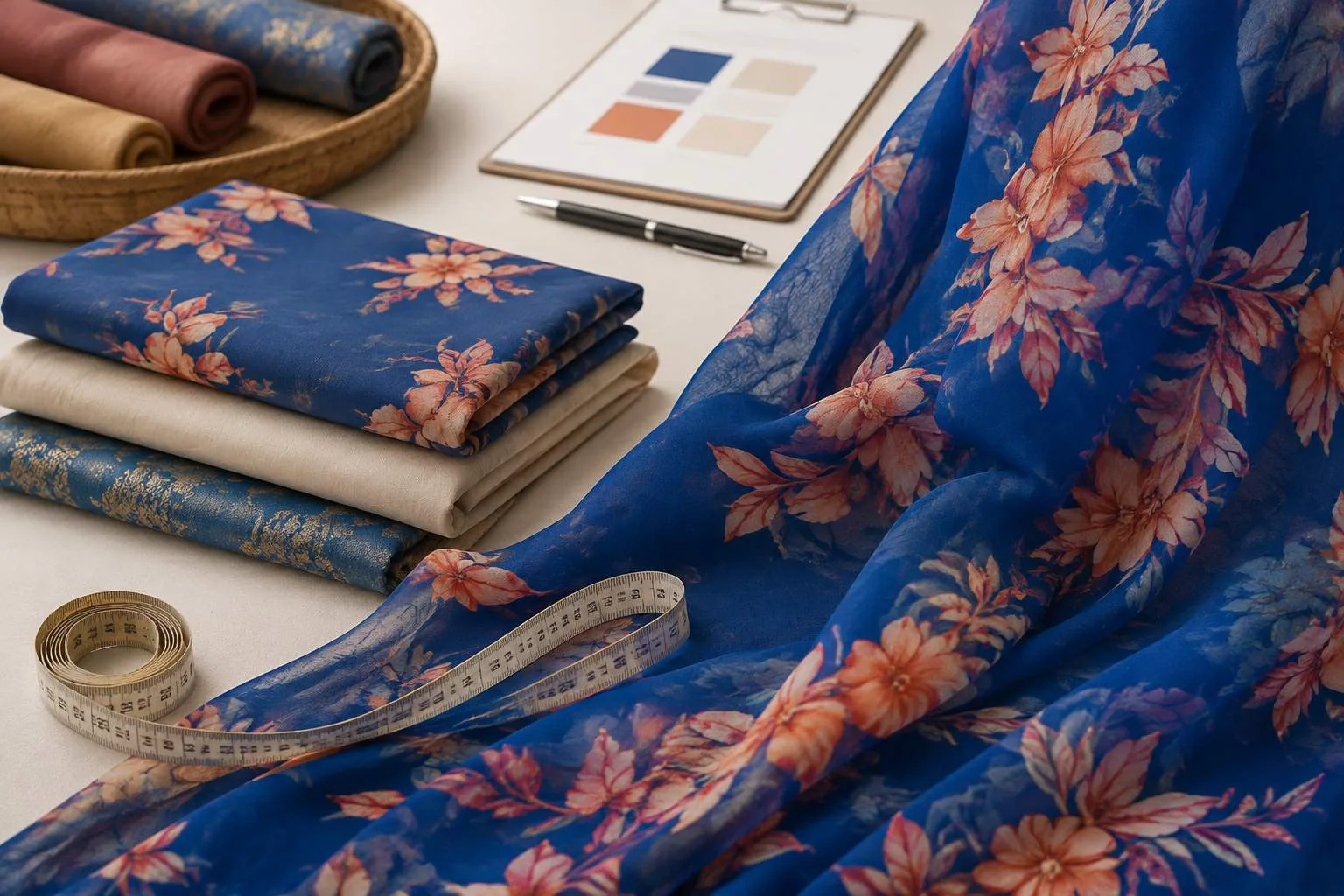
Sudanese Toub Fabric 2026: Cotton Voile vs Polyester Voile for Wholesale Buyers
For wholesale buyers planning Sudanese Toub fabric collections in 2026, material selection has to work beyond the swatch table. The finished Toub must drape correctly, provide the expected coverage, carry the artwork at full scale, and remain clear enough in specification for repeat orders.
Jinlai Textile works with cotton voile and polyester voile for custom Sudanese Toub projects. The practical buying decision is therefore not whether cotton or polyester is “better” in general. It is which material fits the intended product, target market, design, and approved full-size result.
Sudanese Toub Fabric: Key Buying Criteria Before Material Selection
A useful fabric decision starts with the finished product. Buyers who begin with a vague request such as “good voile” often have to settle the important details later: coverage, print scale, size, color direction, and packaging. Starting with the buying brief makes quotations and sampling more focused. It also gives the Sudanese Toub supplier a clearer target when several designs will share the same base fabric.
Define the Finished Toub Before Comparing Fabrics
Before sending an RFQ, decide whether the range is printed or plain, the finished dimensions required, the expected drape and coverage, and how the artwork should appear after wrapping.
Print direction matters early. A small repeat, large floral layout, and border design can behave very differently across a full Toub.
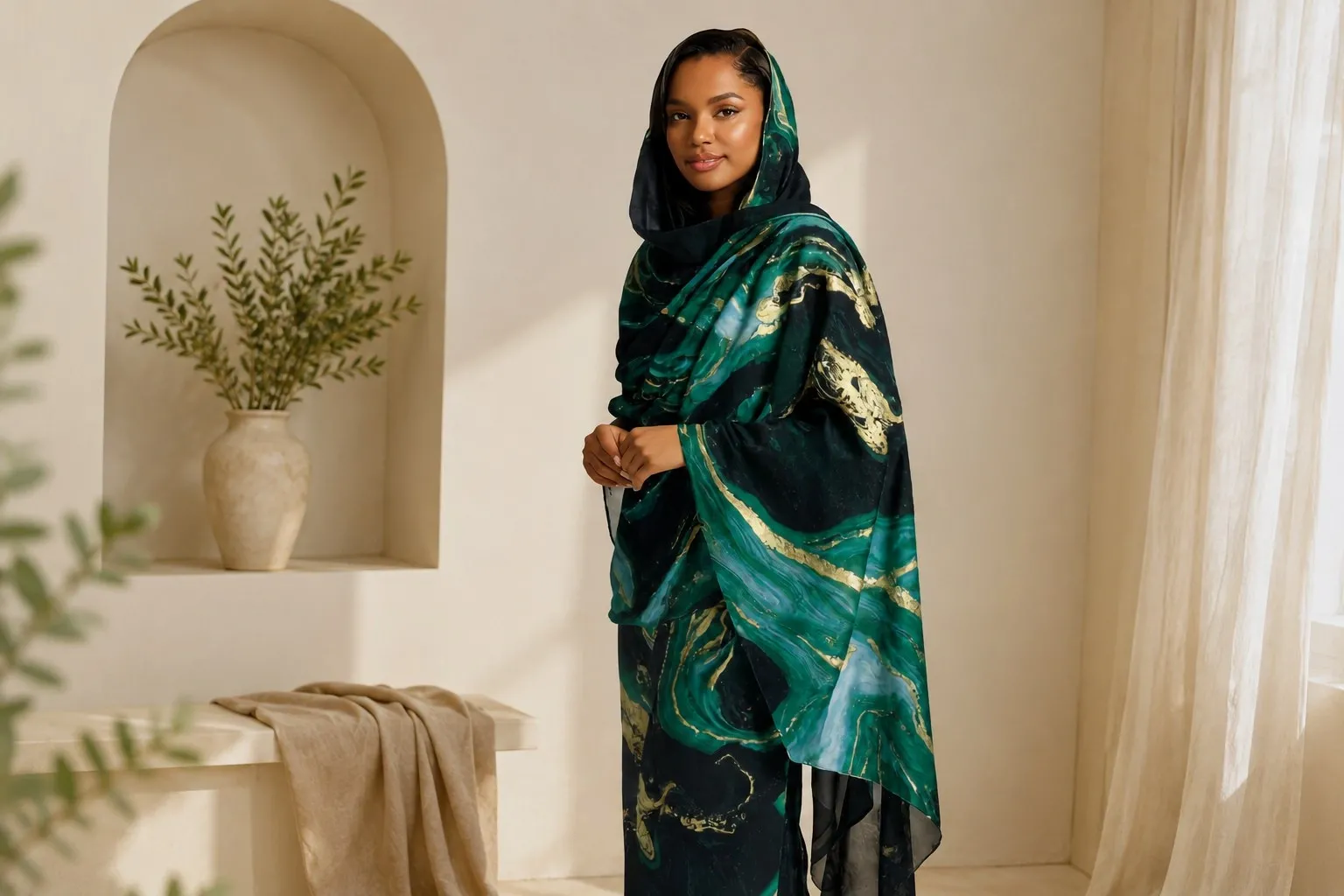
Jinlai Textile's custom Sudanese Toub program covers cotton voile and polyester voile, with printed, plain, custom-pattern, color, size, and packaging options. For B2B sourcing, these choices are more useful when they are part of one clear product brief rather than separate requests added during sampling.
Cotton Voile vs Polyester Voile for Sudanese Toub Wholesale
Once the brief is clear, buyers can compare the two actual material routes. Cotton voile and polyester voile differ first in fiber composition, but composition alone should not decide a wholesale order. The finished product still needs to be checked for hand feel, drape, opacity, print appearance, and color. A physical sample gives a much better purchasing reference than general assumptions about either fiber.
Assess Cotton Voile for Drape, Hand Feel, and Coverage
If the collection specifies cotton voile, review it as a complete Toub rather than a small cutting. Jinlai Textile has a 450 × 150 cm cotton voile Sudanese Toub in its current range.
Open the full piece. Look at the fabric in single-layer areas and then where it overlaps after wrapping. For printed styles, move a few steps back before approving the artwork.
A motif that looks balanced on a small sample can feel much denser across 4.5 meters. This is easy to miss at swatch stage.
Evaluate Polyester Voile for Print Performance and Repeat Production
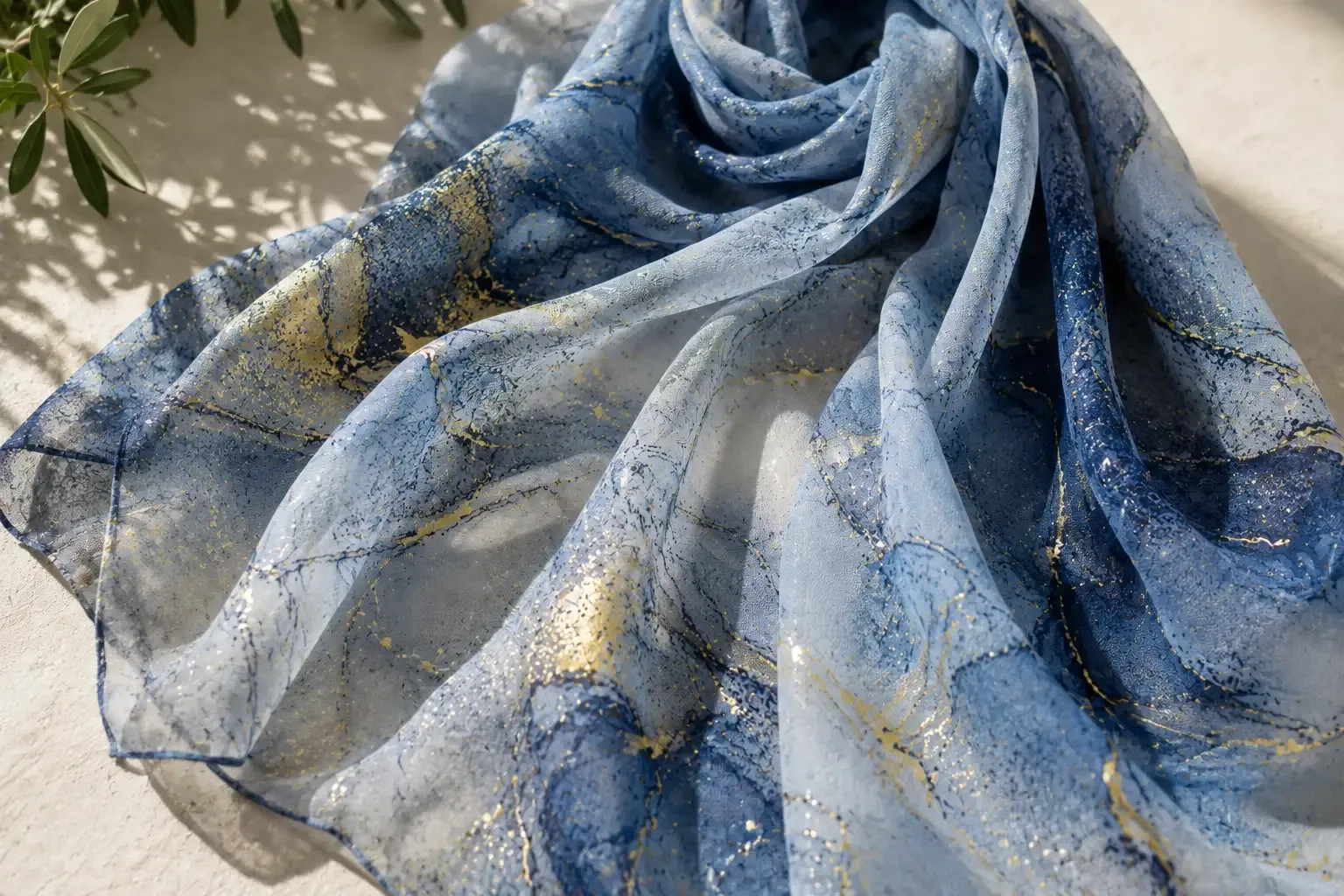
For a polyester voile project, use the same approval discipline. Check the actual sample for drape, opacity, surface, color, and print appearance instead of assuming how it will behave from the word “polyester.”
If several designs use one polyester voile base, identify that base clearly in the order record. When artwork changes later, the buyer and factory can return to the same material reference rather than starting the discussion again.
Buyer Check | Cotton Voile | Polyester Voile |
Fiber | Cotton | Polyester |
Drape | Approve on full-size wrap | Approve on full-size wrap |
Opacity | Check single and overlapping layers | Check single and overlapping layers |
Review on the complete Toub | Review on the complete Toub | |
Color | Confirm against approved reference | Confirm against approved reference |
Buying reference | Approved physical sample | Approved physical sample |
How Full-Size Toub Dimensions Affect Fabric Performance
A toub fabric sample behaves differently when it becomes a 150 × 450 cm finished piece. Several meters create more folds, more overlapping areas, and a much larger surface for artwork. This is where a material that looked fine on the table can reveal issues with coverage, drape, or design placement. For wholesale buyers comparing Sudanese fabric options, full-size evaluation gives information a small swatch simply cannot.
Check Coverage in Single and Overlapping Layers
Review opacity in ordinary daylight.
Start with one layer, then wrap the Toub and look at the areas where two or more layers meet. Avoid treating “sheer” or “opaque” as a complete specification. What matters is how the selected fabric works in the finished product.
Review Drape Across the Full Toub Length
Drape should be judged after wrapping and movement. Watch where the cloth settles naturally and where folds create additional volume.
The Sudanese Toub Size Guide for 150 × 450 cm wholesale specifications provides a separate reference for dimensions and sample checks, so size details do not need to be repeated inside the material comparison.
Approve Print Scale and Border Placement
Printed Toub should also be viewed from a distance. Check whether a repeat becomes too crowded, whether a large motif disappears into folds, and whether borders still sit correctly when the Toub is wrapped.
For private-label collections, approval should cover the complete artwork layout. A cropped screen image may look attractive, but it is not the finished selling piece.
Where Voile vs Tulle and Voile vs Linen Fit in Toub Sourcing
Broader fabric searches still have value during early research. Buyers comparing voile vs tulle, tulle vs voile, voile vs linen, or cotton voile vs linen are usually trying to separate fabrics by structure, surface, and handling. Those comparisons can clarify what kind of fabric behavior a buyer wants. They should not replace the product-specific decision required for an actual Jinlai Textile Toub order.
Separate Fabric Research From the Actual Purchase Specification
A voile vs tulle search helps distinguish woven voile from an open mesh construction. A voile vs linen comparison addresses a different fabric structure and surface.
For Jinlai Textile sourcing, the practical discussion then moves back to the two available Toub materials: cotton voile and polyester voile.
That distinction keeps general research useful without turning unrelated fabric categories into purchase options. Once the material direction is narrowed, the next step is to validate the actual Toub rather than continue comparing fabric names.
Full-Size Sample Approval and Repeat Sudanese Toub Orders
Sampling connects material selection with bulk production. A buyer can use the full piece to confirm dimensions, drape, coverage, artwork, and presentation before approving the order. The same sample also becomes valuable later if a style sells and needs replenishment. For Sudanese Toub wholesale, a controlled reference reduces ambiguity when the next purchase order arrives months later.
Apply Clear Full-Size Sample Approval Criteria
Before bulk approval, check:
· Finished width and length
· Full-wrap drape and hand feel
· Single-layer and overlapping opacity
· Artwork scale and placement
· Border position and color reference
· Label details
· Packing requirements
Keep written approval notes with the sample. “Same as last time” is convenient language in a chat, but it is not a useful production specification.
Maintain a Controlled Reference for Repeat Production
For each approved style, keep the material, finished dimensions, artwork version, color reference, label position, and packaging method tied to the physical sample.
Jinlai Textile's Sudanese Toub OEM and ODM service supports physical sampling as well as custom development, labels, and packaging. Physical samples for custom printed Sudanese Toub projects are available in approximately 15–20 working days.
For repeat business, the value of this record is practical. If only the print changes, the buyer can identify what should remain fixed. If the base material changes, it can be treated as a new approval rather than quietly carried into the next order.
Conclusion
For Jinlai Textile buyers, the Sudanese Toub fabric decision is centered on cotton voile and polyester voile. The right choice comes from the intended product and the approved full-size sample, not from broad claims about one fiber being better than another.
Define the buying brief, review coverage and drape on the complete Toub, approve artwork at full scale, and keep one controlled reference for repeat production. Buyers ready to discuss a project can send the material choice, size, artwork, quantity, packaging requirements, and destination through the Jinlai Textile inquiry page.
FAQ
Q1: What fabric is used for Sudanese Toub?
A: For Jinlai Textile's current Sudanese Toub programs, the material options are cotton voile and polyester voile. The final choice should be based on the required product specification and approved full-size sample.
Q2: What is the difference between cotton voile and polyester voile for Sudanese Toub?
A: The confirmed difference is fiber composition. Wholesale buyers should compare actual samples for drape, hand feel, opacity, color, and print appearance before selecting the production material.
Q3: Is voile the same as tulle or linen for Sudanese Toub use?
A: No. Voile vs tulle and voile vs linen are useful fabric research comparisons because the materials have different structures. For Jinlai Textile's Sudanese Toub production, the sourcing decision is between cotton voile and polyester voile.
Q4: What should buyers check on a 150 × 450 cm Sudanese Toub sample?
A: Check finished dimensions, full-wrap drape, single-layer and overlapping opacity, print scale, border placement, color reference, labeling, and packing before bulk approval.
Q5: What should I send a Sudanese Toub manufacturer for a wholesale quotation?
A: Send the preferred material, finished size, artwork or color reference, quantity by design, label and packaging requirements, and destination market. A clear RFQ gives the manufacturer enough information to discuss sampling and pricing around the actual product.