Digital vs. Rotary Screen Printing for Sudanese Toub: 2026 Cost, MOQ, and Reorder Guide for Wholesale Buyers
Choosing a printing method for a Sudanese Toub collection is a commercial decision, not just a factory detail. The process affects setup cost, minimum order quantity, design flexibility, delivery planning, and the ability to reproduce a bestseller months later.
In 2026, wholesale buyers are working with shorter selling seasons and tighter inventory budgets. Ordering more units may reduce the quoted price per piece, but it also increases exposure when a new pattern does not sell as expected. That is why buyers should compare digital textile printing and rotary screen printing around the full purchasing plan—not simply the lowest unit price.
Why Printing Strategy Matters for Wholesale Buyers
Unit Price Does Not Show the Full Buying Cost
Consider a wholesaler preparing eight floral designs for Ramadan or Eid. A larger production run may look attractive on paper because the setup cost is spread across more units. The problem appears when two designs sell quickly, three move slowly, and the remaining styles sit in storage.
The actual buying cost includes:
· Artwork preparation
· Sampling and color approval
· Screen or file setup
· Quantity per design
· Unsold inventory
· Reorder speed
· Shade consistency
· Packaging and shipment deadlines
A low factory price does not automatically create a profitable order. Inventory that needs heavy discounting can erase the savings pretty fast.
Trial Collections and Proven Styles Need Different Plans
A new pattern and an established bestseller should not be handled in the same way.
Digital printing can be useful when buyers want several designs in smaller quantities. Rotary production becomes more attractive when the pattern is stable, the order is larger, and future demand is easier to predict.
The practical rule is straightforward:
Choose digital printing when design variety and market testing matter more than the lowest possible bulk unit cost. Consider rotary screen printing when demand is stable and production volume can spread the setup cost.
Digital Textile Printing vs. Rotary Screen Printing
How the Processes Affect Purchasing
Digital textile printing applies prepared artwork through an inkjet workflow without conventional screen engraving. Production still requires proper file preparation, color management, fabric treatment, and finishing, but design changes are generally easier before the order begins.
Rotary screen printing uses engraved cylindrical screens to apply individual colors as fabric moves through the printing line. A multi-color pattern may require several screens. That adds preparation work, although the cost can become more economical when distributed across a larger volume.
Buying factor | Digital textile printing | Rotary screen printing |
Best fit | Trials, short runs, multiple designs | Larger runs and stable repeat designs |
Initial setup | Artwork and color-file preparation | Color separation and screen preparation |
Pattern detail | Fine florals, gradients, tonal effects | Repeating motifs and strong color areas |
Design changes | More flexible before production | More involved after screens are made |
Cost pattern | Often suitable for smaller quantities | Unit economics usually improve with volume |
Reorder control | Artwork, color profile, fabric, sample | Screens, color recipe, fabric, sample |
Neither method is automatically better. The right process depends on the product, quantity, artwork, and reorder plan.
Comparing Cost and MOQ
Setup Cost Versus Cost per Piece
Digital printing does not require conventional screens, but the setup is not free. Artwork may need cleaning, repeat adjustment, color profiling, and a fabric strike-off. Designs with heavy ink coverage or complex color requirements can also affect the quotation.
Rotary screen printing requires color separation and screen preparation. As the number of colors rises, so does the preparation work. Once production starts, however, the setup cost can be spread across a larger order.
There is no reliable universal break-even quantity. Two designs with the same order volume may still carry different costs because of:
· Number of colors
· Motif size
· Fabric composition
· Print coverage
· Required finish
· Quantity per colorway
· Future screen-storage requirements
For quantities between a small trial and a confirmed bulk program, buyers should request quotations for both methods.
How MOQ Changes the Better Choice
For a launch collection containing several prints, digital production may reduce the quantity committed to each design. This can help buyers compare sell-through across regions or retailer groups before placing deeper orders.
For an established pattern with predictable demand, rotary screen printing may offer better large-order economics.
MOQ is not only a factory restriction. It affects cash flow, stock exposure, and how many designs a buyer can carry at once. Jinlai Textile’s bulk Sudanese Toub MOQ guide provides additional guidance on how fabric, finishing, and customization can influence order planning.
Which Printing Method Fits the Design?
Detailed Florals, Gradients, and Multiple Colorways
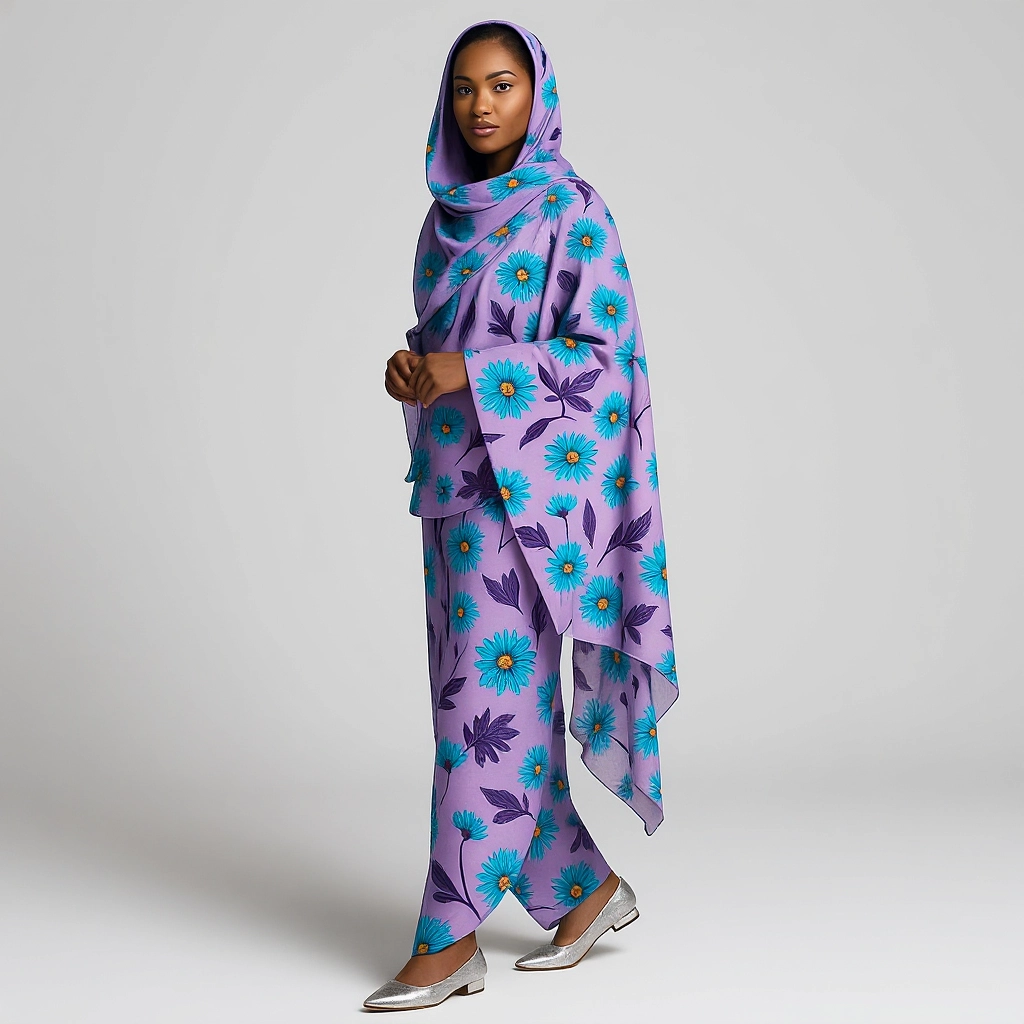
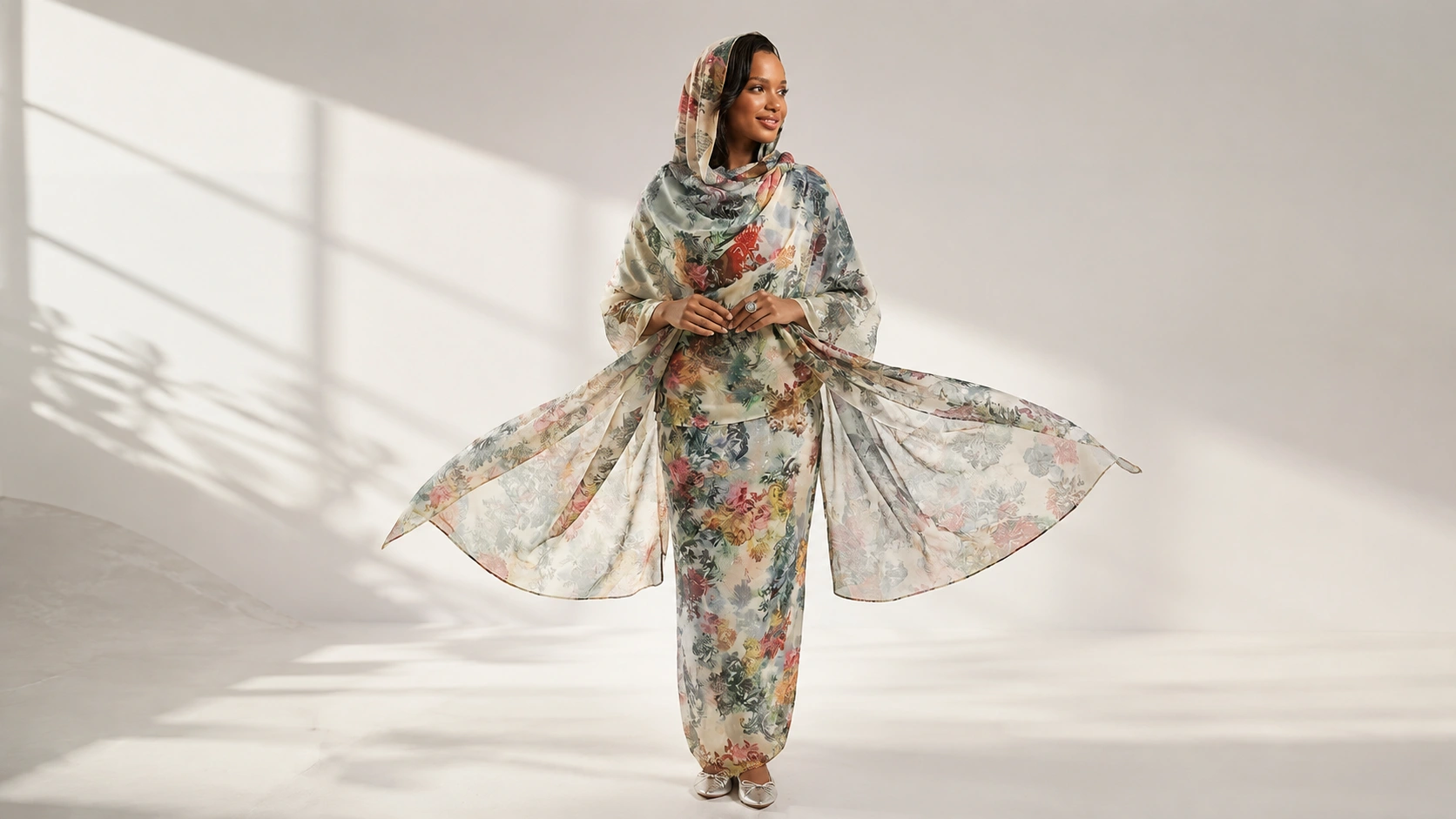
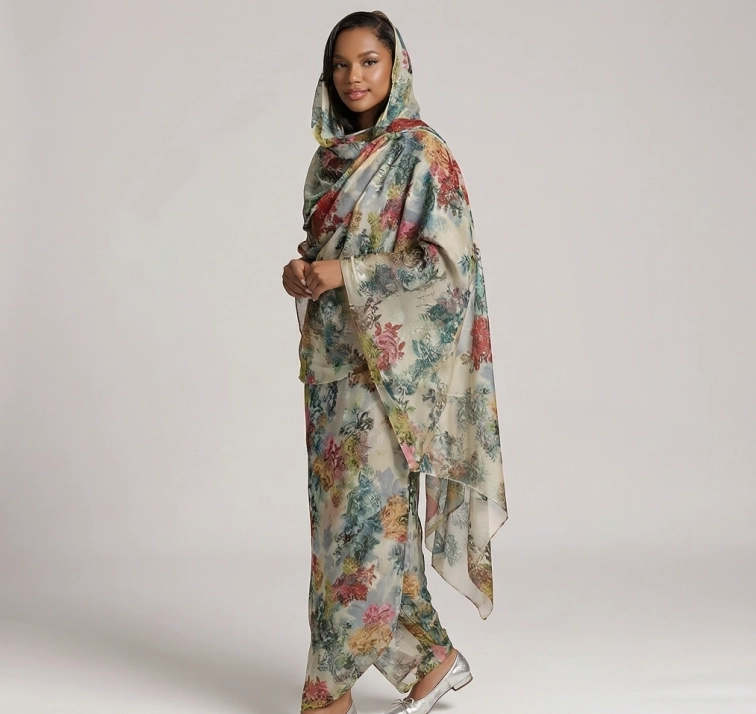
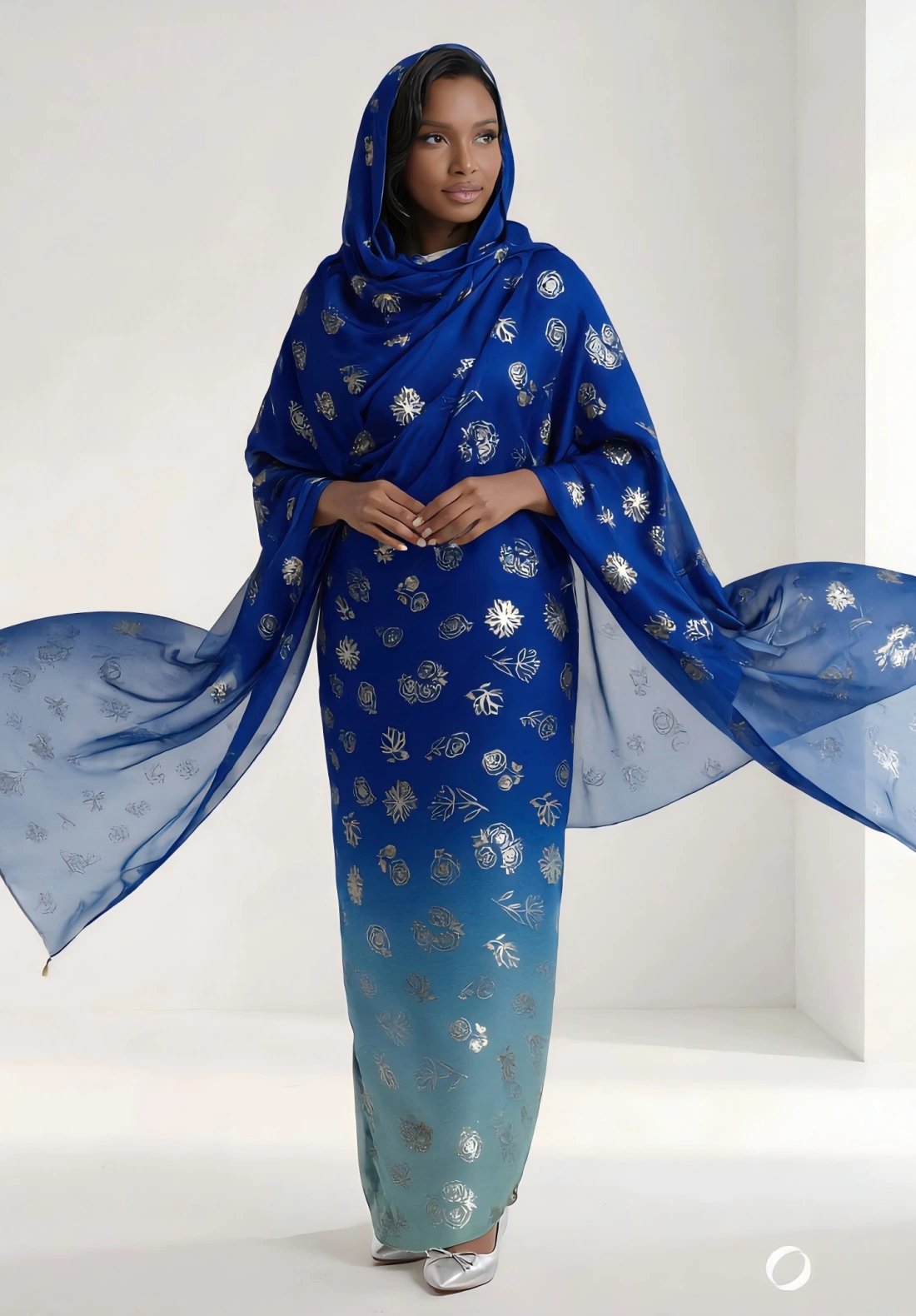
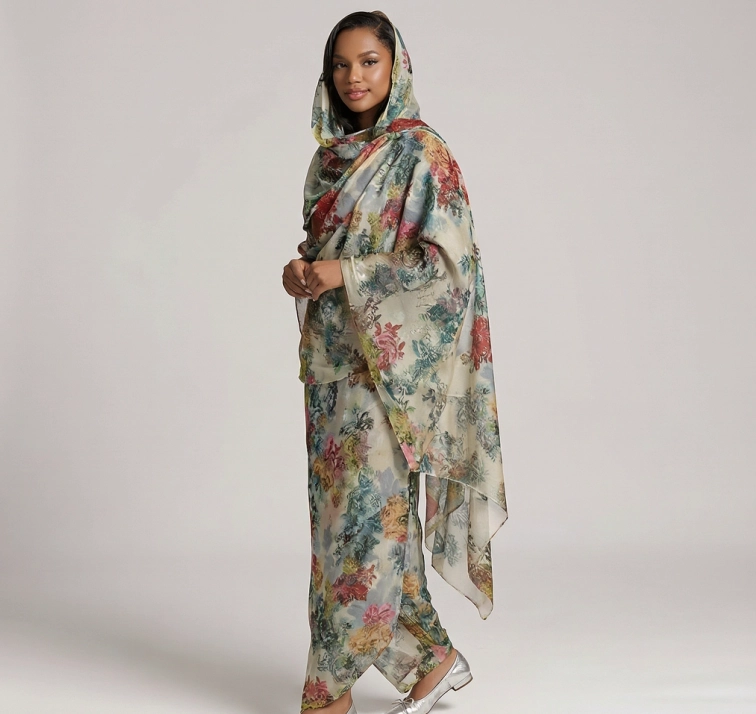
Sudanese Toub collections often feature fine floral elements, soft tonal transitions, and several related colorways. Digital printing can reproduce complex visual detail without preparing a separate physical screen for every color.
This makes it practical for:
· Seasonal design testing
· Region-specific colorways
· Detailed floral artwork
· Tonal and gradient effects
· Collections with several designs and lower quantities per style
Still, a screen preview is not enough. The printed result must be evaluated on the intended production fabric.
Repeating Motifs and Stable Bulk Demand
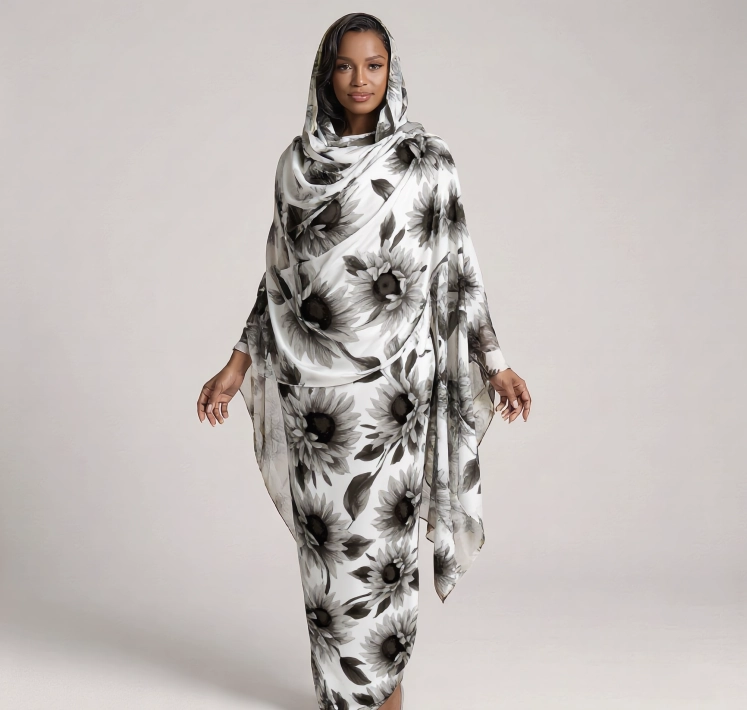
Rotary screen printing may be the stronger option for repeating motifs that already have dependable sales. The buyer should confirm how many screens are required, whether they will be stored, and what happens if the design is reordered later.
Screen storage sounds like a minor detail during the first order. Six months later, when a retailer requests the exact same design before a holiday selling period, it becomes a very practical question.
Jinlai Textile’s published Sudanese Toub content identifies digital and rotary screen printing as options for customized projects.
Match the Printing Method to the Base Fabric
The same artwork can behave differently on cotton voile and 100% polyester. Surface structure, pretreatment, ink selection, and finishing influence color appearance, drape, opacity, and hand feel.
Jinlai Textile’s custom Sudanese Toub range includes cotton voile and 100% polyester options, printed and plain styles, custom colors, adjustable sizing, and custom packaging.
Before bulk production, approve a strike-off on the selected fabric and check:
· Motif scale and placement
· Color appearance
· Print definition
· Opacity
· Hand feel
· Drape
· Rubbing or washing performance where required
A strike-off approved on 100% polyester should not automatically be used as the production standard for cotton voile.
Reorder Consistency and File Control
Records for Digital Reorders
For a digital reorder, retain the final artwork file, repeat size, color references, production-fabric specification, and approved physical sample.
A saved artwork file does not guarantee an identical result. A change in the base fabric, treatment, ink system, or finishing process can alter the shade and hand feel.
Records for Rotary Reorders
For rotary orders, retain the separated artwork, screen references, color recipes, base-fabric details, and approved sample. Buyers should also confirm how long screens will be stored and whether recreation will add cost or lead time.
When a digitally tested design moves into rotary production, a new strike-off is necessary. The pattern may require color separation or motif adjustments, and the final appearance can shift between the two processes.
The Sudanese Toub fabric QC guide covers related checks for print clarity, batch shade, rubbing fastness, surface quality, and approved-sample control.
Three Practical Buying Scenarios
Testing a New Collection
A wholesaler launches six designs with uncertain demand and a limited quantity per print. Digital printing may offer the more flexible route because the buyer can test greater design variety without committing the full budget to each pattern.
Reordering a Proven Bestseller
A floral style has sold consistently across several retail accounts. The artwork is stable and the next order is considerably larger. Rotary production may deserve a new quotation because its setup cost can be spread across more units.
Moving From Trial Orders to Scale
The buyer starts with a digitally printed market test, reviews actual sales, and identifies the best-performing designs. Those patterns can then be quoted for rotary screen printing.
Before changing methods, approve a fresh sample. Check color, motif definition, hand feel, and the base fabric again. Digital and rotary processes can work together: one supports testing, while the other supports scale.
Working With Jinlai Textile
What Buyers Should Include in an RFQ
An accurate quotation requires more than a picture and a total quantity. Buyers should provide:
· Original artwork or a clear design reference
· Preferred base fabric
· Finished Toub dimensions
· Number of colors and designs
· Quantity per design
· Target market
· Finishing requirements
· Label and packaging needs
· Expected reorder plan
· Required shipment date
How Jinlai Textile Reviews Printing Options
Through its Sudanese Toub OEM and ODM service, Jinlai Textile supports custom product development, sampling, fabric selection, labels, packaging, trial orders, and bulk production planning.
The recommended printing method should be based on the actual order rather than a fixed rule. Artwork complexity, fabric, colors, quantity per design, finishing, and repeat-order expectations all affect the decision.
Conclusion
Digital textile printing often fits design testing, detailed artwork, and lower quantities per style. Rotary screen printing may become more economical when demand is stable, the design is fixed, and production volume can absorb screen preparation.
The best choice for Sudanese Toub wholesale is the one that balances print quality, cash flow, inventory risk, and reorder consistency—not merely the lowest quoted price. Contact Jinlai Textile with the artwork, fabric preference, estimated quantity per design, target market, and packaging requirements to request a preliminary printing recommendation, sample plan, and wholesale quotation.
FAQs
Q1: How should wholesale buyers choose between digital and rotary screen printing for Sudanese Toub?
A: Buyers should compare order quantity, artwork detail, color count, setup cost, target unit price, inventory risk, and expected reorder volume. Digital production often suits trials and design variety, while rotary production may suit larger, stable orders.
Q2: Which printing method usually supports a lower MOQ?
A: Digital textile printing often accommodates smaller quantities because conventional screens are not required. Actual MOQ still depends on the fabric, artwork, finishing, color requirements, and production schedule.
Q3: When does rotary screen printing become more cost-effective?
A: Rotary production may become more competitive when the order is large enough to spread screen and setup costs across more units. There is no universal crossover quantity.
Q4: Can a digitally printed Sudanese Toub design be moved to rotary screen printing?
A: Yes. The artwork may need color separation, motif adjustments, and a new strike-off. Buyers should approve the rotary sample before bulk production because color and detail may differ.
Q5: What information is needed for a Sudanese Toub wholesale printing quotation?
A: Provide the artwork, base fabric, dimensions, quantity per design, number of colors, finishing, packaging, destination market, delivery date, and expected reorder volume.