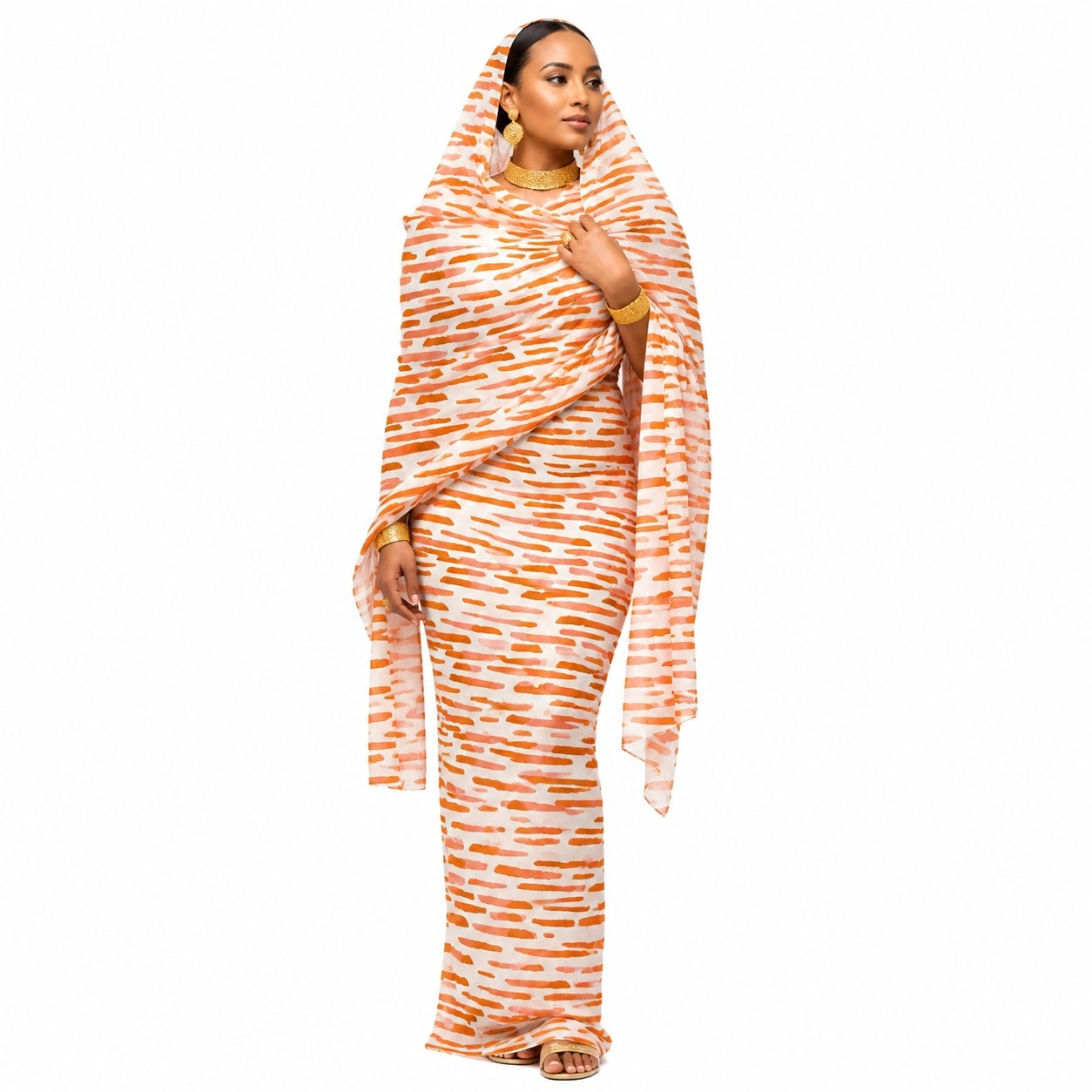
Sudanese Toub Import Documents for Wholesale Shipments to Sudan
Sudanese Toub import documents can be prepared alongside the wholesale order. For the ACD application, the required file contains a draft bill of lading, commercial invoice, freight invoice, certificate of origin and packing list. Start with the agreed goods description and packed quantities, then have the filing contact check them across the file. Before loading, confirm the validated reference's submission to the carrier and its inclusion on the final bill of lading.
For wholesalers handling assortments, a useful place to begin is the unit of sale. Pieces on an invoice and cartons on a transport draft are quite compatible. The explanation belongs in the packing list. Descriptions matter just as much: a collection name identifies the buyer's selection, but material and supplied format explain the cargo to a broker who may never have handled that collection.
Product details that belong in Sudanese Toub import documents
Start the product description with the supplied form: complete Toub pieces, fabric measured by length, or the format otherwise agreed in the order. Follow it with the confirmed material and dimensions. An invoice line for fabric sold by length cannot silently become a piece count in another record. Where both forms are ordered, two lines retain the original selling units.
A buyer selecting from Jinlai Textile's Sudanese Toub collection can carry the chosen reference into the order discussion. Settle its material and supplied format with the supplier before commercial records are prepared. The documents can then refer to the same item that was quoted and approved. The retail collection name remains useful for selection, while the confirmed order details describe what is being shipped.

For assortments, the breakdown used at quotation is a convenient starting point for packing: each reference, color and quantity stays on its own line. A code for a blue design distinguishes it from a brown version, but says nothing about their fibers. Put the material in the description beside it. That gives the packing team an identifier and the broker an explanation of the goods.
ACD requirements and the person responsible for filing
ACD stands for Advance Cargo Declaration. In its Sudan import advisory, Maersk gives January 1, 2026 as the effective sailing date for the requirement. Its instructions place the reference submission before loading at the initial port. The reference also goes on the final bill of lading, commonly shortened to B/L. This is the transport document issued by the carrier.
Sudan's official news agency reported the October expansion to ports and customs crossings on September 30, 2026. For a purchase team, the next question is the procedure at the planned entry point. The report doesn't establish an identical timetable at every crossing. Confirm the actual booking's procedure and cut-off with the local broker and carrier, especially when the route differs from the previous order.
Assign the application to a named contact early. Documents arrive from different contributors, and an invoice query shouldn't have to wait while the buyer, supplier and forwarder decide who will answer it. The coordinator's contact list can name the issuer of each record and the person who handles corrections. Agree amendment responsibility and charges during the order discussion as well; submission alone isn't the whole task.
Five records with different jobs
With Jinlai Textile's gold-stamped Sudanese Toub option, the finish helps identify the selected design. It does not establish the base fiber. The order description needs the confirmed material as well as the decorative treatment, tied to the selected reference. That distinction keeps a useful product name from becoming an incomplete commercial description.
Use the five records listed in the ACD supporting-document notice for a line-by-line comparison. The goods invoice answers what was sold and at what value. The packing list answers where those goods sit in the load. On the transport draft, check that the description and package count agree with that load. The freight invoice concerns transport charges, so its total isn't expected to duplicate the goods value.
Record | Detail to reconcile |
Commercial invoice | Product lines, selling units, quantities, value and currency |
Packing list | Contents by item, carton count and actual shipment weights |
Draft bill of lading | Shipper, consignee, cargo description, packages and route |
Freight invoice | Transport charges associated with this shipment |
Certificate of origin | Final authorized origin evidence for the goods shipped |
The same business doesn't have to occupy every party field. A buyer can, for example, arrange delivery to another company as consignee. In that arrangement, the approved details for both companies belong with the filing contact. Check that each appears in the intended role. Where purchase correspondence uses a trading name, establish the legal details to use on the commercial records before they are issued.
Leave tariff classification to review with the appointed broker. Send the agreed material, dimensions and supplied format, not just the product's name. A previous Toub shipment might have contained a different fabric or format. If its code is being considered again, the broker should be able to explain its suitability for this order from the actual goods details.
From saleable pieces to a usable packing list
The two hypothetical arrangements below illustrate a count check, not Jinlai Textile's packing specifications. They contain the same number of pieces but different outer-carton counts.
Sale quantity | Pieces per outer carton | Outer cartons |
600 pieces | 20 | 30 |
600 pieces | 15 | 40 |
A Sudanese Toub packing list can report the selling quantity and outer count in separate fields, with the arrangement shown clearly. A field labeled packages gives little guidance unless it also names the level. For inner packs or individual retail bags, identify those counts separately from the outer cartons prepared for transport.

Jinlai Textile can discuss custom packaging and SKU grouping for Toub orders, with item identification and receiving checks covered in its export packing and carton marking guide. Agree the arrangement during the purchase discussion. Once the order is packed, use the actual counts and weights in the shipment file. The carton marks and item breakdown then give the receiving warehouse references to check on arrival.
Obtain the weights from the packed shipment. Fabric dimensions don't account for its retail bags, inserts or cartons. Assortment quantities also warrant more than a glance at the grand total. If blue and brown quantities have been swapped on the list, the total may still add up, yet the warehouse's receiving check will be based on the wrong color breakdown. Compare the lines before accepting the sum.
Why a draft bill of lading and an origin certificate differ
Origin evidence is the attachment to finalize at source. Under the origin-certificate notice, it must be issued or endorsed by a recognized competent authority in the country of export. Drafts, preliminary versions, unsigned documents and unendorsed copies won't meet that notice. At order stage, establish who's arranging the certificate and how the final document will reach the filing contact. The draft permission for the B/L doesn't apply here.
For the B/L, there are two document stages to track. The application FAQ permits a draft for the application; the final B/L carries the ACD reference. Assign review of the draft and delivery of the validated reference as separate tasks. A note confirming delivery closes that handover. It gives the purchase team something to check without assuming that application submission also completed the carrier's requirement.
Changes between order approval and loading
An amendment message can be short and specific: field amended, earlier value, replacement value and documents affected. For a change of consignee, these details concern the receiving party. A reduced piece quantity reaches into the invoice and packing too. The coordinator can circulate dated replacements once those changes have been carried through, retaining the earlier set as superseded for reference.
Allow for review and correction when agreeing the booking calendar. A factory completion date doesn't include every later transport step; the Sudanese Toub shipping lead-time guide separates those stages from warehouse arrival. If a document amendment affects the booking, the forwarder can confirm the revised timing. Use that response when updating retail delivery plans rather than carrying forward an earlier estimate.
Retain the upload acknowledgement, but look for validated approval separately. The ACD platform terms permit further review and corrections after submission, so an acknowledgement cannot establish certificate issuance. The last booking check is that the carrier has accepted the reference. Import clearance remains with the importer and local broker; approval of this advance declaration does not guarantee that outcome.
Conclusion and next step
The final review of Sudanese Toub import documents is a reconciliation of the order with the load. Each reference has a selling quantity and a place in the packing breakdown. The parties are identified by role, and the origin evidence has the required final status. Bring any remaining difference to the coordinator before loading. Keep the reviewed transport draft and confirmation of the validated reference's handover together for the booking check.
An importer can begin a Sudanese Toub import enquiry with Jinlai Textile by attaching the selected references and quantities, destination and proposed packing. Broker document requirements are useful at this stage too, while the commercial order is being discussed. Before loading, the appointed forwarder, carrier and local broker must confirm the applicable filing arrangements for that shipment.
Frequently asked questions
Does ACD approval replace customs clearance?
No. Approval concerns the advance declaration, not the full import-clearance procedure. The local broker can check the goods, classification and destination requirements for the actual shipment. The five records listed in this guide form the ACD application file; additional customs requirements are a matter to confirm separately for that movement.
Can a Toub collection name establish its fiber composition?
No. A collection or design name identifies a selection, while the material description identifies what is being supplied. The confirmed fiber details belong in the order record before commercial documents are prepared. A decorative finish such as gold stamping does not establish the material beneath it.
Can the same ACD cover later repeat orders?
The ACD relates to its shipment, as explained in the application FAQ. A repeat product order is not evidence that an earlier declaration remains valid. For split or later shipments, the filing coordinator needs to confirm coverage and application arrangements before the relevant booking proceeds.
Which packing details need final confirmation?
Confirm the contents and count of the outer cartons, with quantities by item and actual weights. Where inner packs are used, name that level too. The final list should describe the packing prepared for dispatch. If an earlier quotation used another arrangement, update the breakdown before it goes into the application file.