How Buyers Change a Sudanese Toub Wholesale Order After Confirmation
A different color mix can look straightforward on a wholesale buyer's stock sheet. For Sudanese Toub order changes, the production position matters too. Buyer and supplier must agree on the revision before it becomes an instruction for the goods. The confirmed purchase order provides the reference for that discussion, whether the request concerns quantities, decoration or a retail pack.
An amendment is one option among several. Goods already made may still have a sales outlet, allowing the buyer to keep them and discuss a later purchase for the new requirement. Before choosing, purchasing needs to compare the supplier's response with the customer's commitment. The useful question is what the revision achieves after its cost and timing are taken into account.

Commercial Grounds for Sudanese Toub Order Changes
A retail customer asks for a different assortment after the wholesale order has been confirmed. That hypothetical situation raises two questions before any production discussion: how firm is the customer's revised commitment, and can the original assortment still be sold? Reopening the order on the strength of an uncertain preference may leave the buyer paying for work without securing a better sale.
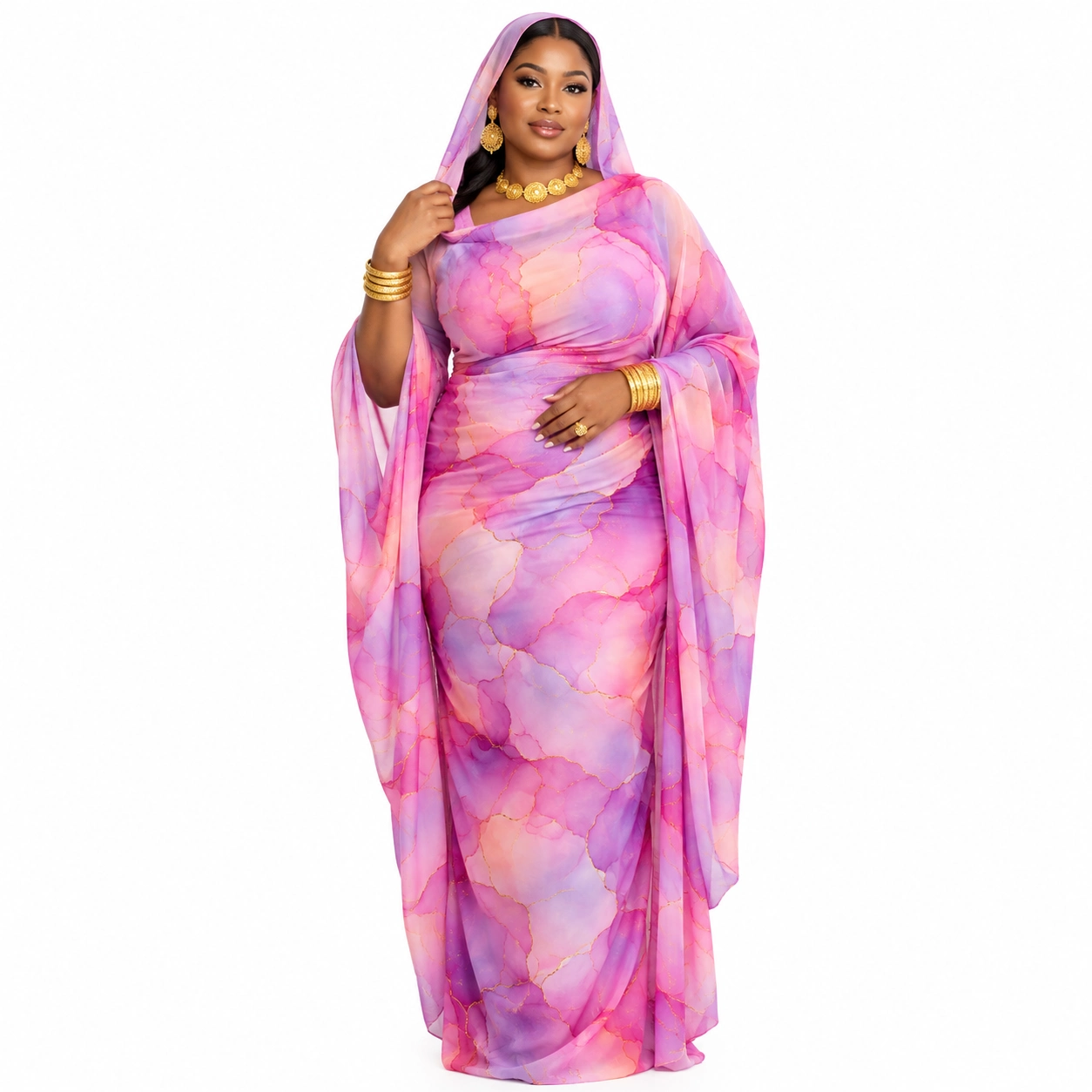
A color-allocation request concerns a different part of the order from a new retail pack. Jinlai Textile's custom Sudanese Toub options include both, alongside printed or plain designs and sizing choices. The existing Toub reference anchors the discussion. Against that reference, the buyer can explain whether the request concerns more of an approved item or development of a replacement. The distinction matters when deciding what the supplier is being asked to assess.
This is also a purchasing-practice issue. A March 2026 study of UK fashion manufacturers reported last-minute changes and disagreements about cost and delivery. That research does not measure Toub demand. It does illustrate why an amended product instruction should travel with a commercial discussion, rather than leaving the price consequences until the goods are ready.
Scope and Production Status
There are two parts to the request: the difference from the confirmed order, and the supplier's position on the affected goods. A replacement document that obscures the original quantities makes both harder to discuss. A simple old-versus-new record keeps the change visible.
Color Allocation and Quantity Revisions
An illustrative order makes the distinction clear. The buyer originally wanted 100 pieces in one color and 300 in another, then requested 150 and 250. Both assortments total 400 pieces. However, the supplier is being asked for an additional 50 pieces of the first color while losing demand for 50 of the second. Material commitments for those particular colors now become relevant.
The useful record puts the confirmed and requested quantities beside each color code. The rest of the order can remain visible with an unchanged status. This is also the point to replace informal names with supplier references. A description such as a light shade may be familiar to the buyer's sales team and still be ambiguous in a production discussion.
Completed Work and Remaining Commitments
A dated status update should distinguish fabric awaiting decoration, decorated pieces and packed units. If purchasing requests a pause during assessment, the message should name the relevant color or design. The response then establishes whether that pause can be arranged. A request awaiting an answer gives no reliable basis for telling a retail customer that production has stopped.
Proposed revision | Status information to discuss |
Change the color mix | Materials allocated and work completed for each affected color |
replace a print or decoration | Current approved reference and stage reached on the affected pieces |
Revise labels or folding | Packing already completed and the existing approved pack |
An artwork replacement also raises a version question. The custom print approval guide deals with that design task. In an amendment, the buyer must additionally identify which quantity belongs to the old reference and which to the new one. Otherwise, an apparently clear artwork approval can leave the order itself ambiguous.
Cost and Delivery Assessment
The original quotation and the amendment proposal should be readable side by side. For the affected lines, what is being supplied now, and which charges have changed? Artwork preparation or sample work may sit outside the unit price. Material already committed may raise a separate discussion. An itemized explanation lets purchasing assess the offer rather than negotiate an unexplained total.
Amending the Order or Placing a Later Purchase
Three choices deserve comparison: retain the original agreement, amend selected lines, or discuss the new requirement as a later purchase. Keeping finished goods may preserve a sale. A later top-up may suit additional demand. The available production arrangement and its terms have to be established for either route.
Costs are easier to compare when quantities remain attached to product versions. A proposal covering both original and revised goods must identify that mixture. Otherwise, purchasing may approve a price while the retail customer expects a replacement across the entire order. The issue is the content of the offer, before any judgment about whether it is expensive.
Approval Deadlines and Receiving Dates
A date without a named milestone can mislead. Goods completing production on the required receiving date have not thereby reached the buyer's warehouse. The amendment discussion should distinguish sample approval, completion, dispatch and expected receipt, with freight transit considered between the last two. This makes the supplier's timing proposal easier to compare with the customer's sales requirement.
A new sample can add a further condition. The proposal may depend on comments by a particular date, which matters if a designer approves color while purchasing negotiates delivery. Both functions need to see that condition. A request for earlier delivery remains a request until the supplier accepts a schedule that accounts for the outstanding approval.
Amendment Approval and Version Control
After the parties select an option, the accepted revision has to be identifiable. It should connect the original purchase order to the changed fields, quantities and effective version. Earlier files can remain valid for untouched goods; replacing every file indiscriminately risks losing that distinction.
A branded revision may concern the Toub itself or what accompanies it. Jinlai Textile's Sudanese Toub OEM and ODM support covers designs and earlier ideas, as well as labels and packaging customization. A buyer revising a motif and a woven label can therefore identify two separate approval tasks. Each affected reference belongs in the amendment. Which proofs or samples will release that work is then agreed for the project, keeping product approval connected to the actual presentation requested.

Receiving a replacement file and accepting the work described in it are separate events. An acknowledgment should prompt a follow-up if the commercial answer is missing. The accepted version and quantity need to be identifiable alongside the cost and timing conditions. Where negotiations took place by telephone, a written recap gives both parties a chance to resolve anything left open.
An amendment is not the same task as resolving a discrepancy. For a newly chosen motif, the starting point is the buyer's changed requirement. For an incorrect motif found during inspection, it is the accepted original reference. Responsibility and any cancellation rights depend on the relevant terms and facts, beyond the scope of this change-request framework.
Packing and Receiving Checks
The purchasing record may be correct while a warehouse still holds an older packing instruction. Where the order contains two versions, receiving staff need a way to tell them apart. The accepted product identity and quantity should therefore be checked against the packing list and receiving reference before release.
Jinlai Textile's custom packaging and OEM labeling options allow a changed identifier or presentation to be raised as a defined request. The export packing and label requirements help prepare that discussion. The actual pack, identifier and affected quantity still need agreement for the revised order.
The closing check concerns what was accepted: correct version, correct quantity, agreed inspection evidence and current shipping information. Unchanged goods remain part of that delivery record. Further design ideas can be discussed separately, leaving this check focused on whether the agreed amendment has carried through to the goods being released.
Conclusion: Preparing a Defined Change Request
Sudanese Toub order changes deserve a clear comparison with the purchase already agreed. The buyer may secure a better assortment through an amendment, or find that retaining saleable goods is the more useful outcome. The decision rests on a specific requirement and the supplier's assessment of the affected work. An attractive replacement design, by itself, cannot settle the commercial question.
For an order assessment or initial custom inquiry, contact Jinlai Textile with the Toub reference and a color-by-color comparison of the confirmed and requested quantities. The changed requirement and required receiving date belong with that comparison. Any choices still under development can be identified separately, so feasibility, samples and quotation terms are discussed against a defined request.
Frequently Asked Questions
Can Color Quantities Change While the Total Stays the Same?
Yes, the buyer can request it. The unchanged total leaves a production question open, however: which materials and completed work belong to the colors being reduced? A written response on the new allocation, including cost and timing, gives purchasing a basis for updating the retail customer.
Can Extra Pieces Join the Confirmed Order?
An approved design describes the goods but does not establish availability for an extra quantity. The request should identify the additional pieces and the date they are needed. The supplier's assessment can then address whether they belong with current work or require a later arrangement.
What Can a New Buyer Settle Before Confirmation?
The buyer can ask which records release the order and how amendments are handled after that point. Requirements awaiting design work should remain identifiable beside settled specifications. This prepares a clearer first purchase; it does not imply acceptance of changes before their actual scope is known.