How Dubai Buyers Source Sudanese Toub for Gulf Wholesale and Retail
For buyers searching Sudanese Toub wholesale Dubai suppliers, the best starting point is a market brief, not a price list. Dubai buyers often serve more than one sales channel: local stores, Gulf distributors, social sellers, and customers buying for events or travel.
A useful sourcing plan therefore defines the customer, retail position, fabric route, design level, sample checks, and packaging needs before quotations are compared.
The practical goal is to create a collection that can be explained, sampled, received, and reordered without confusion. Buyers should separate ready design selection from custom development, approve complete pieces rather than small swatches alone, and ask every supplier or manufacturer to quote against the same written specification.
Start with the Dubai sales channel, not a generic Gulf label
“Gulf market” is too broad for an actionable request. A Dubai importer supplying multi-brand shops may need a different mix from a retailer selling mainly through Instagram or WhatsApp. A distributor serving several Gulf cities may also need clearer product codes, language-ready labels, and repeatable packing than a single boutique.
Write down three facts before selecting designs: where the product will be sold, who makes the buying decision, and which occasion or price position the collection must cover. If print direction varies by region, use the regional Sudanese Toub print guide as supporting research, then turn that direction into a Dubai-specific product brief.
Build the first shortlist around clear retail jobs
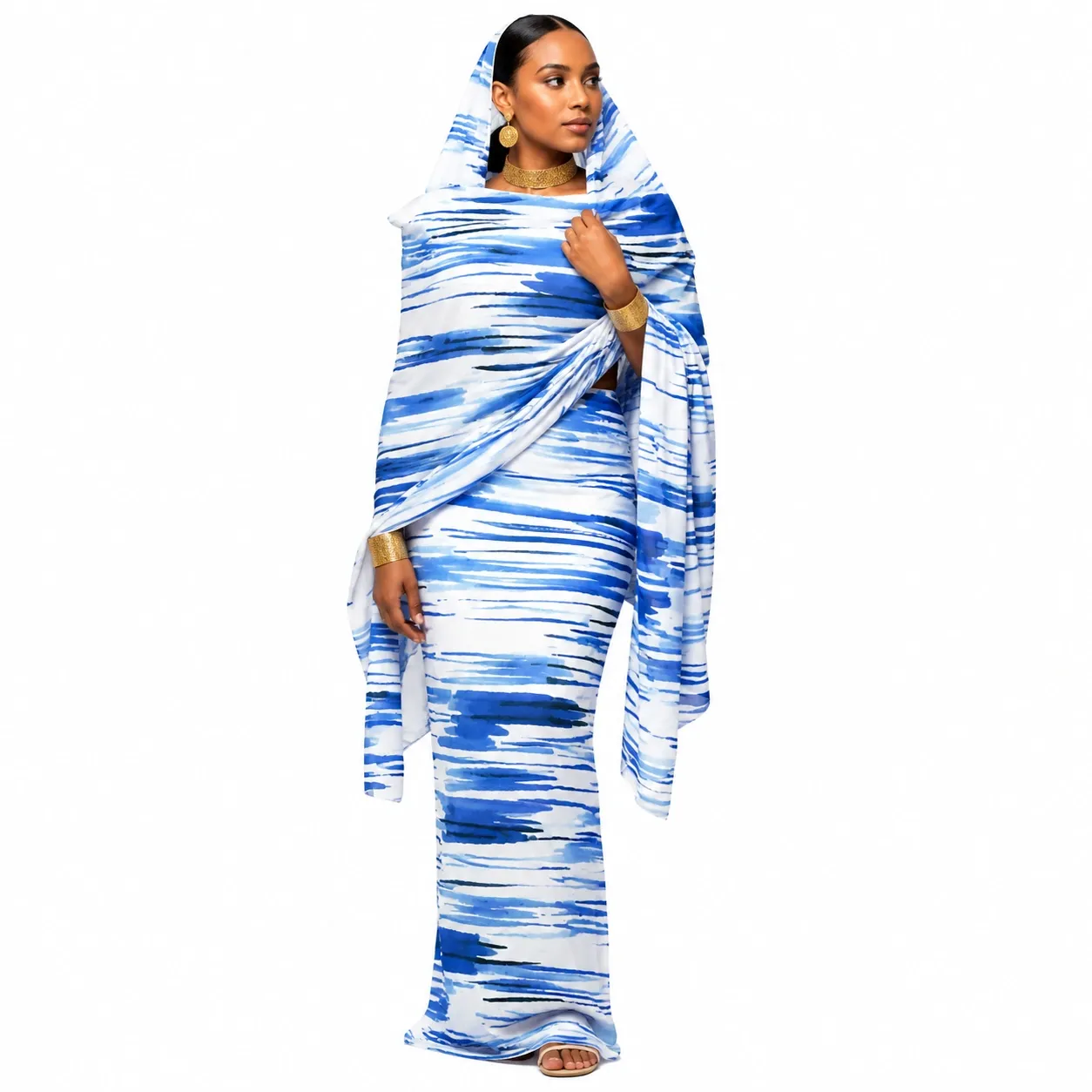
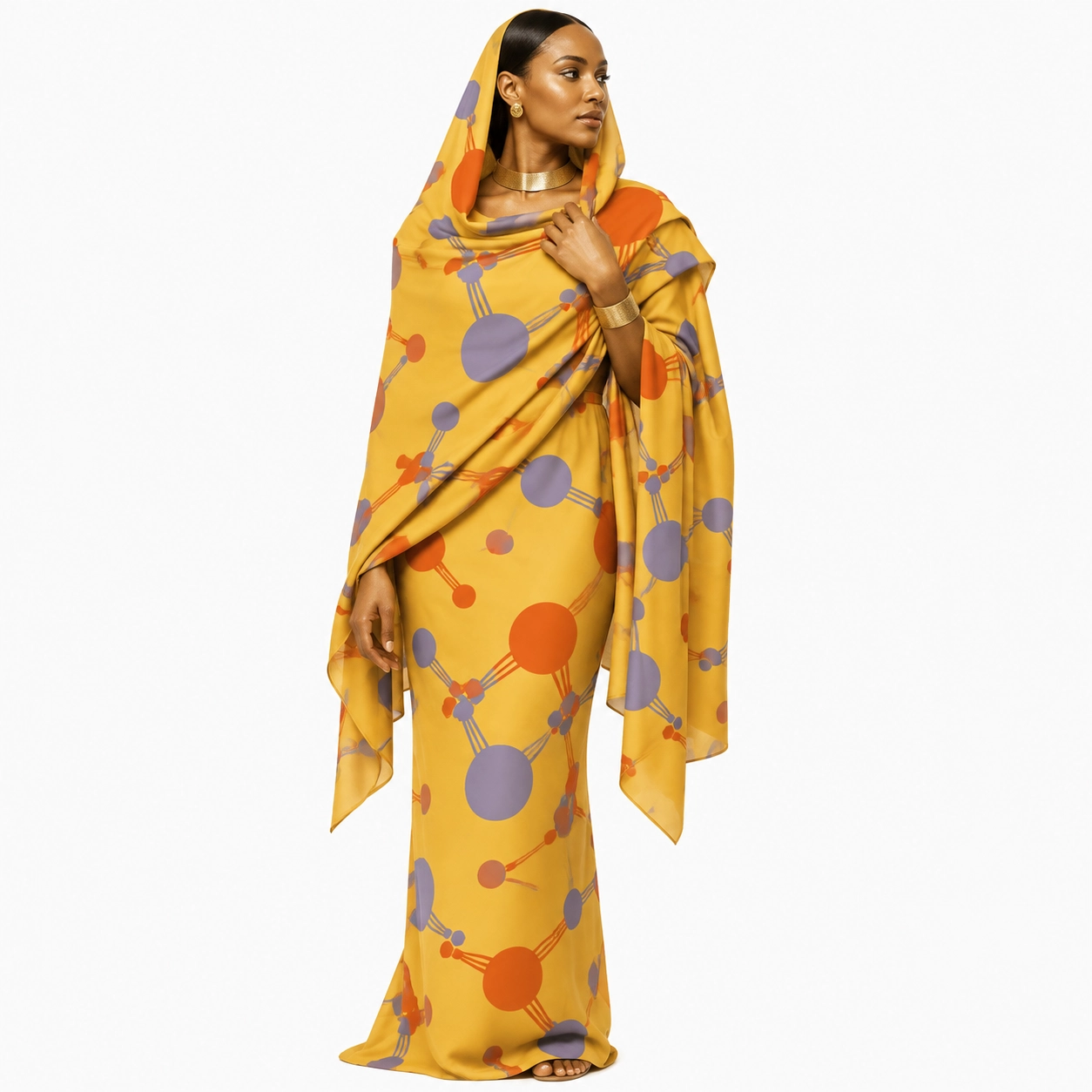
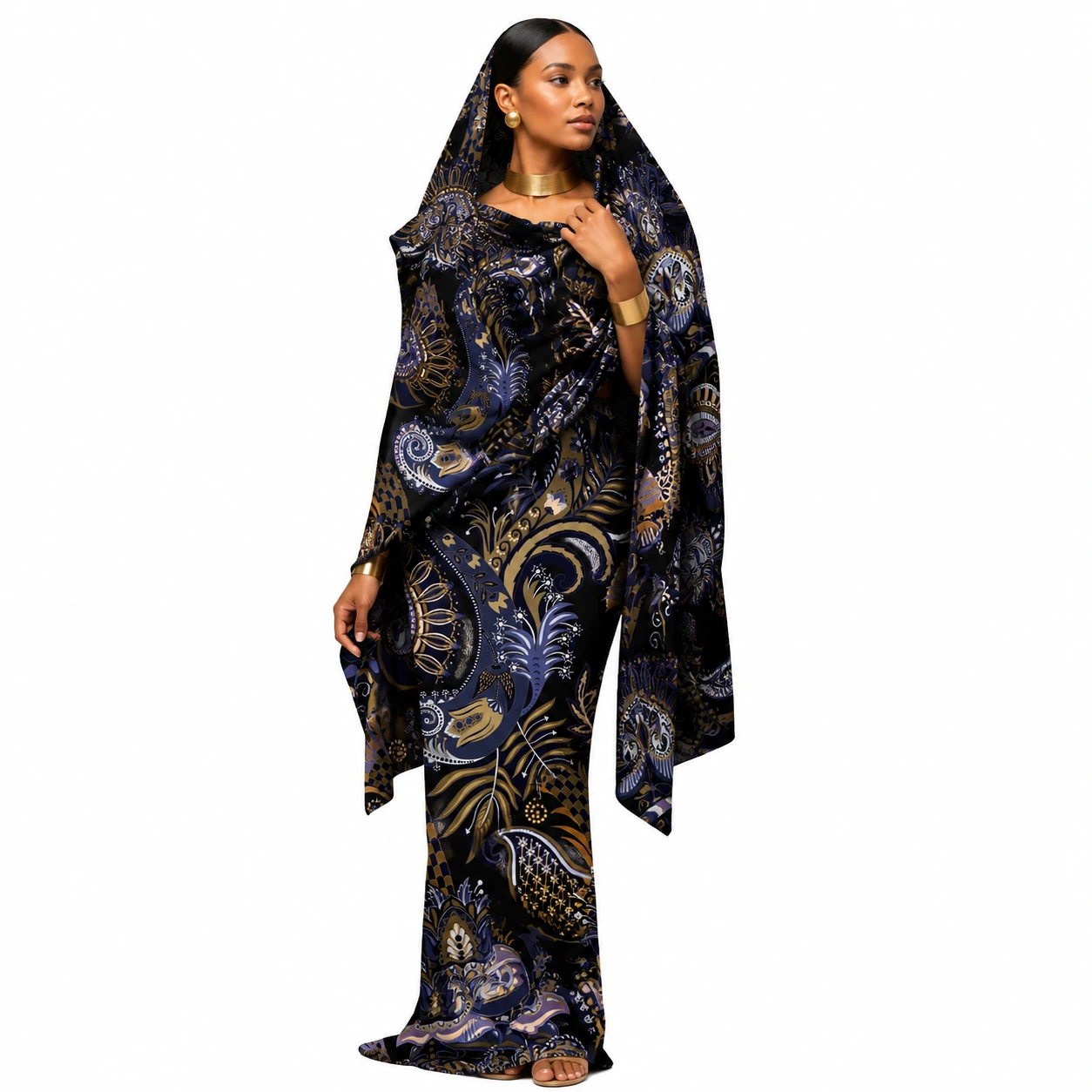
A strong Dubai shortlist does not need dozens of unrelated designs. It needs products with distinct jobs. One group may cover versatile daily and social wear. Another may provide more visible finishes for weddings, Eid, gifting, or premium store displays. A third may test a custom color or pattern for the buyer’s own label.
Use the Sudanese Toub product category to compare product directions, but keep the commercial brief separate from the product name. For every shortlisted item, record the intended channel, customer, design code, base color, fabric route, finish, and required sample format. This prevents two visually similar pieces from becoming one vague SKU.
Approve the complete piece under real selling conditions
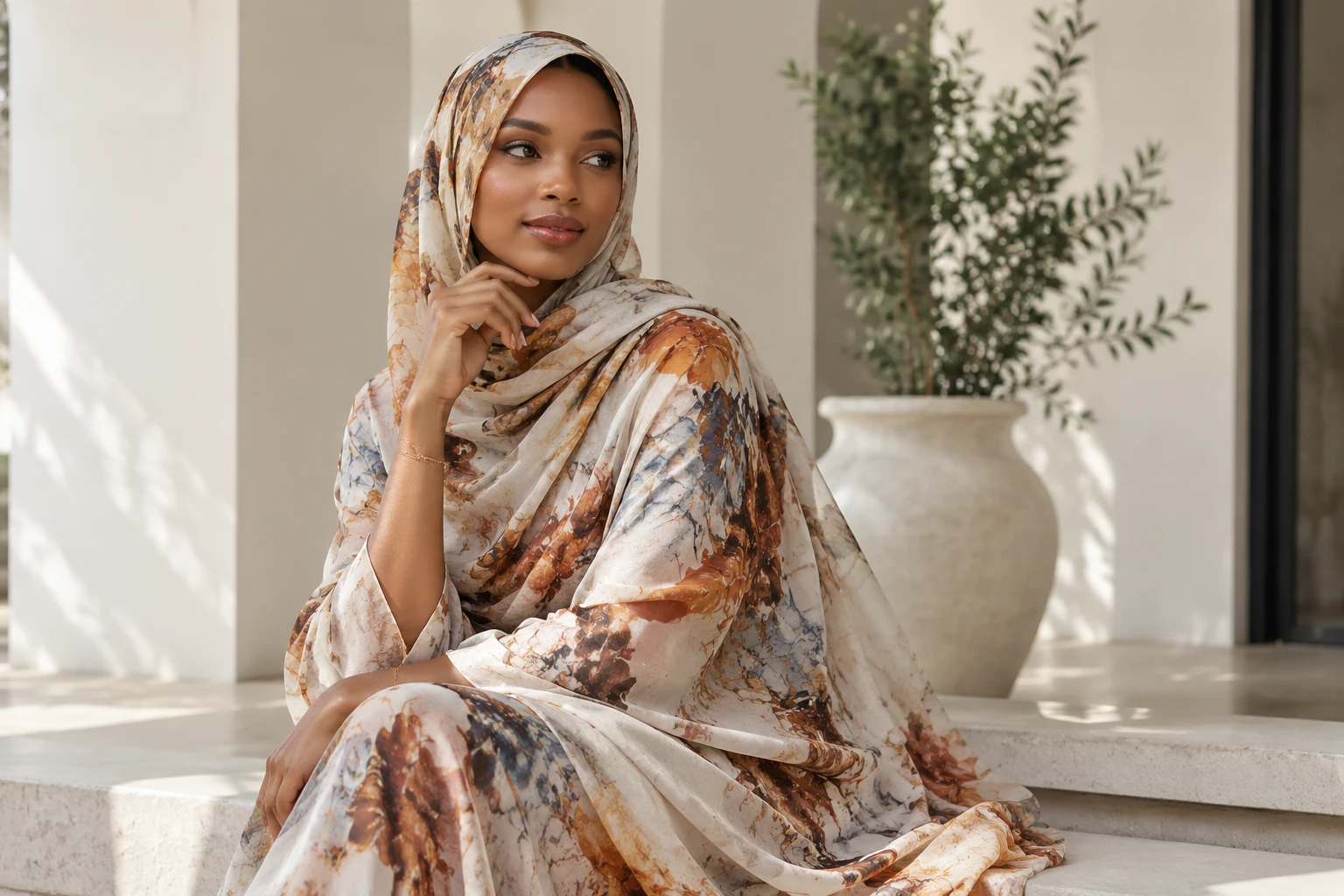
A small cutting can help compare touch and color, but it cannot show how a Sudanese Toub looks after wrapping, folding, or hanging in a store. Request a complete or representative finished sample for final approval. Check the front view, drape, coverage, border position, edge finish, and appearance after the piece is folded for retail.
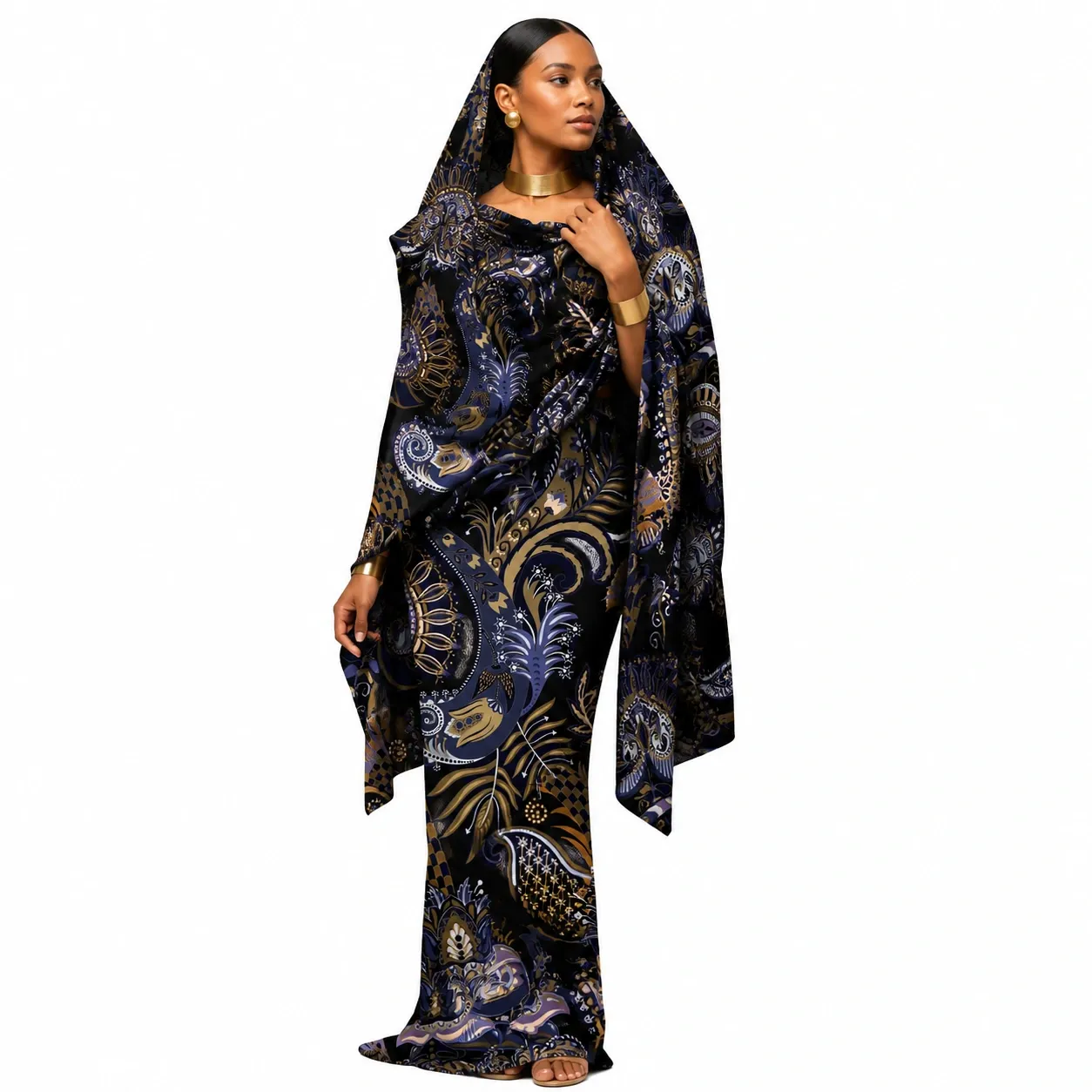
Lighting matters for Dubai retail. Review the sample in daylight, common indoor store lighting, and the lighting used for online product photos. Metallic details can appear stronger on camera, while close color families may look flatter under warm light. The buyer’s approval record should describe what was accepted instead of relying on “same as photo.”
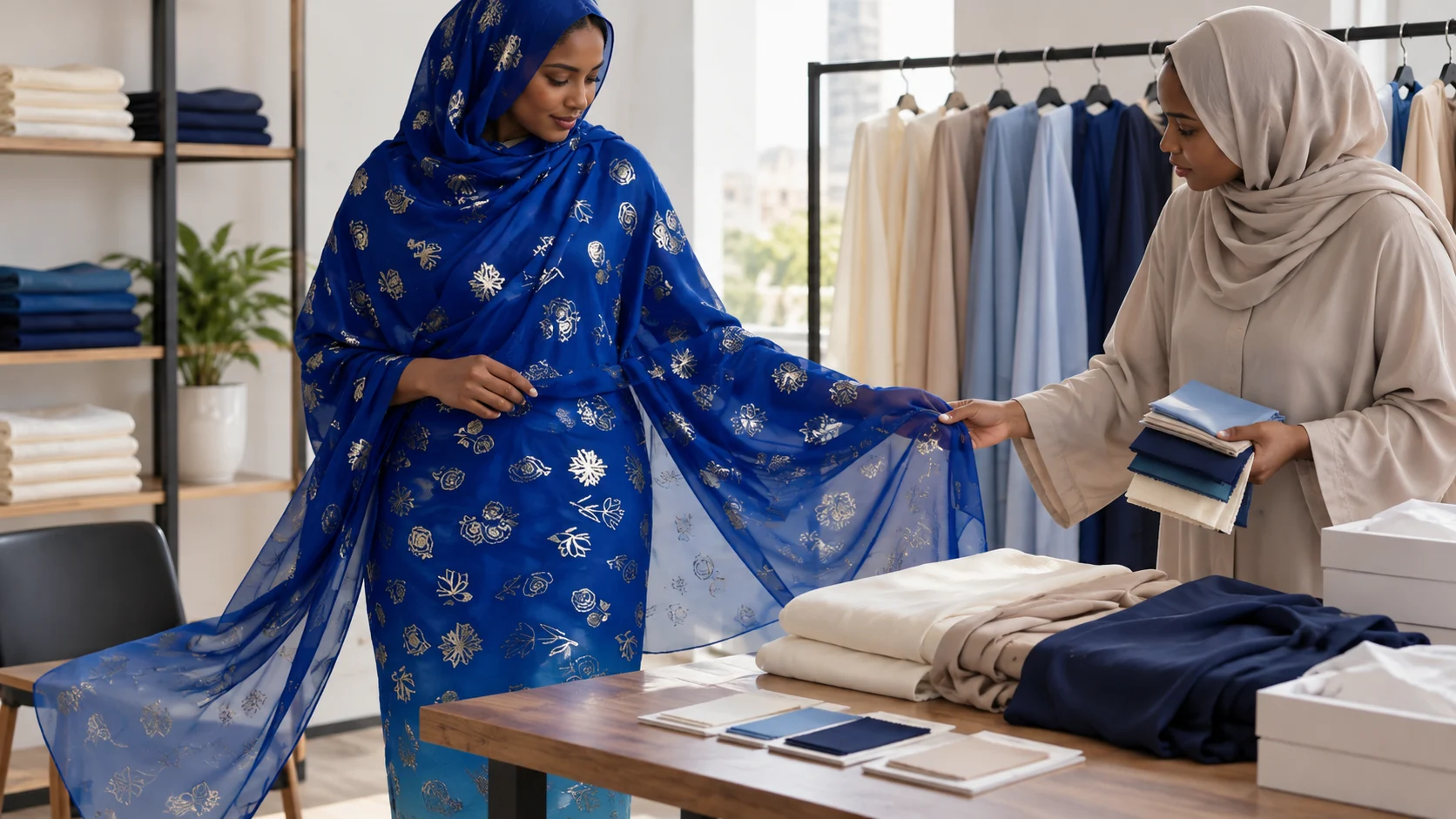
For a premium example, the high-end gold-stamped Sudanese Toub illustrates why finish placement must be judged on the full visual area. Buyers should approve the actual color, motif, metallic effect, and complete-piece balance for the order; one product image cannot replace that review.
Compare suppliers on execution, not only on unit price
A quotation is useful only when every supplier is pricing the same job. Compare fabric description, design version, finished size, label and packing requirements, sampling stage, trade term, and which items remain subject to confirmation. If one quotation includes custom packaging and another assumes standard packing, the totals are not directly comparable.
Use a simple supplier review with evidence attached to each answer. The Sudanese Toub supplier audit guide covers the wider audit process. For this Dubai-focused purchase, pay special attention to sample identity, written change control, packing marks, and the contact responsible for approvals.
Do not copy marketplace claims into the RFQ. Prices, order quantities, delivery statements, and material labels shown on another listing belong to that listing. Ask the selected manufacturer to confirm the terms for your exact product, quantity, destination, and timing.
Keep custom development controlled and easy to review
Jinlai Textile supports Sudanese Toub development through product routes that include printed, plain, patterned, custom-color, labeling, and packaging discussions. Its OEM and ODM service is relevant when a Dubai wholesaler or private-label buyer needs to move from a market idea to a controlled sample.
The buyer still needs to supply a usable brief: target market, design reference, color direction, fabric preference, finish, branding files, packaging request, and approval contact.
The most useful rule is one approved reference for each SKU. Keep the sample code, artwork version, color reference, label file, and packing instruction together. When any one of those changes, issue a new version instead of editing the request through scattered chat messages.
Plan receiving and reordering before the first purchase
Dubai buyers often handle several colors and designs in one shipment. Receiving becomes easier when the supplier’s product code matches the buyer’s purchase order, carton mark, packing list, and internal SKU record. Ask for clear separation by design and color, then confirm the packing method during sampling.
Reordering also depends on records. Save the final specification and approved reference under a stable SKU. Do not reorder from a social-media photo or an old chat description. If the fabric, artwork, finish, or packaging changes, ask for confirmation and decide whether a new sample is needed.
Send a Dubai wholesale RFQ that can be quoted accurately
A focused RFQ should let the supplier understand both the product and the business use. Include:
1. Buyer type and sales channel: importer, distributor, retail chain, boutique, or private-label brand.
2. Destination and markets served from Dubai.
3. Product route, such as printed, custom color, gold-stamped, or another defined design.
4. Fabric preference and the drape, coverage, or hand feel to review in the sample.
5. Finished size or the size to be confirmed during development.
6. Design codes, color references, artwork files, and fixed placement details.
7. Labels, folding, packaging, carton marks, and language needs.
8. Sample type, approval owner, and required review stages.
9. Quantity by SKU for quotation, without assuming a supplier’s MOQ.
10. Requested trade term, destination, and timing target for the supplier to confirm.
Ask for open points to be listed clearly. A short note such as “color subject to sample approval” is more useful than a quotation that appears complete but hides assumptions.
Keep the buyer's evaluation sheet beside the quotation. When a sample changes, update the sheet before requesting a revised price so commercial comparisons continue to refer to the same product.
Use Jinlai Textile as the next sourcing contact
Jinlai Textile’s Sudanese Toub range includes luxury voile, gold-stamped, printed, plain, and custom development directions for wholesale buyers. These options are useful for Dubai sourcing because they allow the buyer to discuss several retail roles without treating every style as the same product. The commercial value comes from translating each direction into a separate sample and SKU record.
For an efficient discussion, prepare the target Gulf channel, selected product references, color or artwork files, preferred fabric route, branding requirements, packing method, quantity by SKU, destination, and requested schedule.
Jinlai Textile can then review which details are ready for quotation and which need sampling or further confirmation. This keeps the conversation focused on a real collection instead of an unsupported request for “Dubai styles.”
Conclusion
Sudanese Toub wholesale Dubai sourcing works best when the buyer defines the channel first, assigns each item a retail job, approves the complete piece, and compares quotations against one written specification.
Dubai may connect local retail with wider Gulf distribution, but the product brief still needs to be specific about customer, design, fabric, finish, branding, packing, and destination.
Keep one controlled sample and record for every SKU. Treat marketplace information as a lead, not as confirmed terms for your order.
To begin a product-specific discussion, send Jinlai Textile your Dubai market brief and RFQ details, including the selected references, quantity by SKU, destination, and sample requirements.
Frequently Asked Questions
What should a Dubai buyer send to a Sudanese Toub supplier first?
Send the target sales channel, customer profile, destination, product references, preferred fabric and finish, color or artwork files, branding and packing needs, quantity by SKU, and the sample decision process. This is enough for the supplier to identify missing details before preparing a product-specific quotation.
Should Gulf buyers approve a swatch or a complete Sudanese Toub sample?
Use swatches for early comparison, but approve a complete or representative finished piece before bulk production. The complete sample shows drape, coverage, motif scale, border position, folding appearance, and the way metallic or printed areas look under store and photography lighting.
Can one Dubai RFQ include ready designs and custom Sudanese Toub styles?
Yes, but list them as separate product lines. Give each style its own code, fabric route, color or artwork reference, sample requirement, label, packing instruction, and quantity. This keeps ready selection and custom development from being priced or approved as if they were identical.
How can a wholesaler prepare for repeat orders?
Save the approved sample code, final artwork, color reference, fabric description, label file, packaging instruction, and purchase specification under one stable SKU. Before reordering, ask the manufacturer to confirm whether any material or process detail has changed and whether a new sample is needed.