Sudanese Toub Wholesale for Online Boutiques: Buyer’s Guide
For Sudanese Toub wholesale for online boutiques, “listing-ready” should mean that the buyer can identify, photograph, describe, receive, and reorder each product without guessing. It does not mean the manufacturer runs the store or creates the final ecommerce listing. The buyer still owns merchandising, product claims, pricing, photography, and local compliance.
The safest sourcing process starts with a small product-data system. Each sample needs a stable SKU, clear fabric and design notes, a color reference, a complete-piece view, label and packaging instructions, and an approval record. Online boutique buyers should build this information while sampling, not after the shipment arrives. That approach makes product pages clearer and repeat orders easier to control.
Define listing-ready before asking for a quotation
Online retailers often use “ready to list” to mean several different things. One buyer may only need individual packing and a product code. Another may need private labels, a barcode field, consistent color names, and packaging that can move directly into fulfillment. Write the required output as a checklist before contacting a supplier.
Turn each sample into a product-data record
A useful product record connects the physical sample to the information the boutique will publish and store. The fields do not need special software; a controlled spreadsheet or product information system can work if the team uses it consistently.
Record field | Buyer decision it supports | What to confirm during sourcing |
SKU and sample code | Keeps listing, stock, and reorder records aligned | One unique code for each approved variation |
Design and color name | Helps customers and staff distinguish products | Reference image plus approved color wording |
Fabric route | Supports accurate product copy and comparison | Confirmed composition and construction for the order |
Finished size | Reduces vague or conflicting listings | Measurement method and approved finished piece |
Finish and placement | Explains visible design details | Print, border, metallic, embroidery, or other confirmed finish |
Label and packaging version | Connects private-label files to the SKU | Approved artwork, placement, and packing instruction |
This record is not a claim that every detail will remain unchanged forever. It is a control point. Before reordering, compare the new confirmation with the approved record and decide whether a revised sample is needed.
Build the collection from product roles, not random images
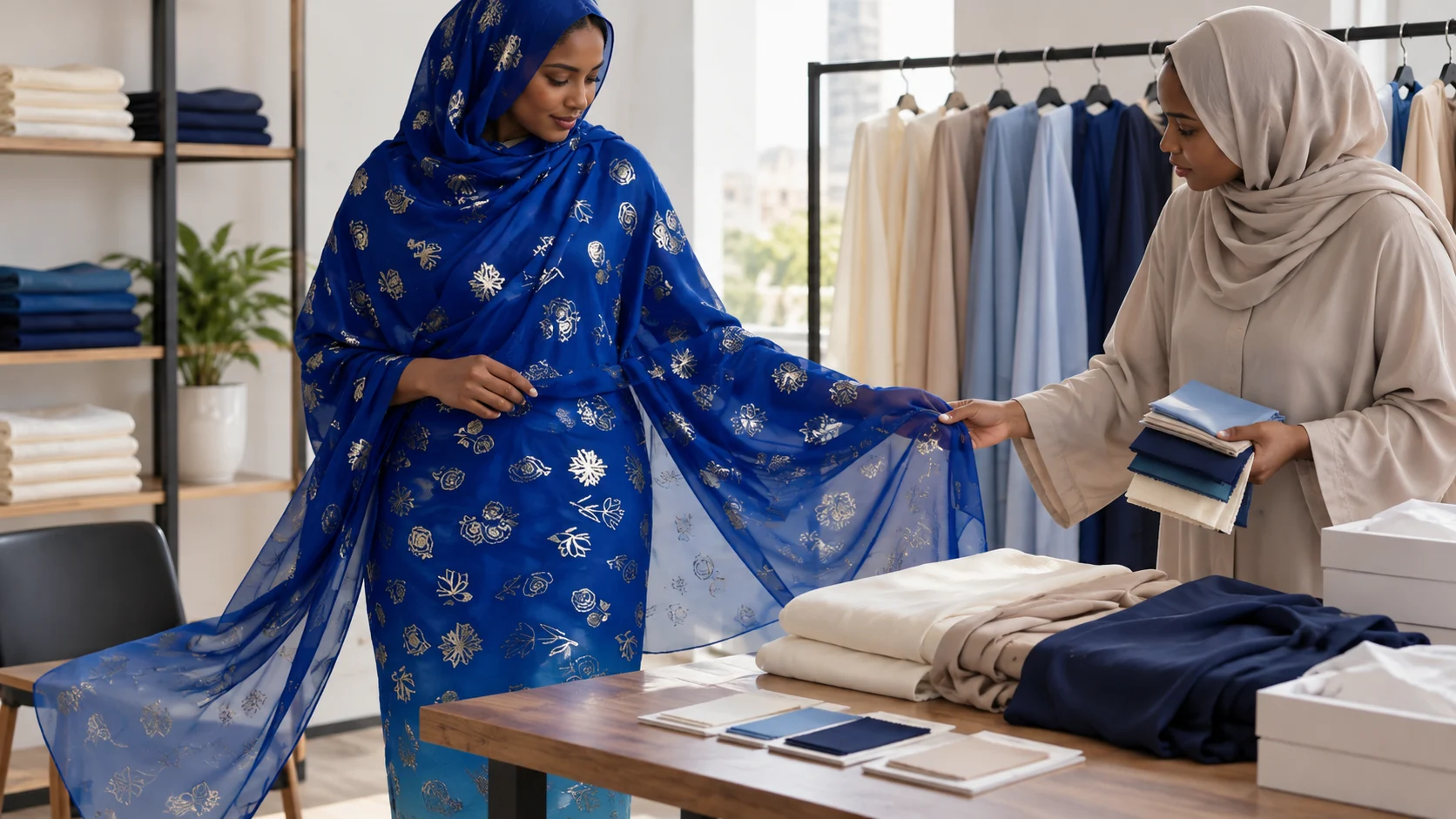
An online boutique needs enough visual variety to create choice, but every additional variation adds photography, copy, stock, and customer-service work. Start with a limited group whose differences can be explained clearly: color family, print direction, occasion, finish, or fabric feel.
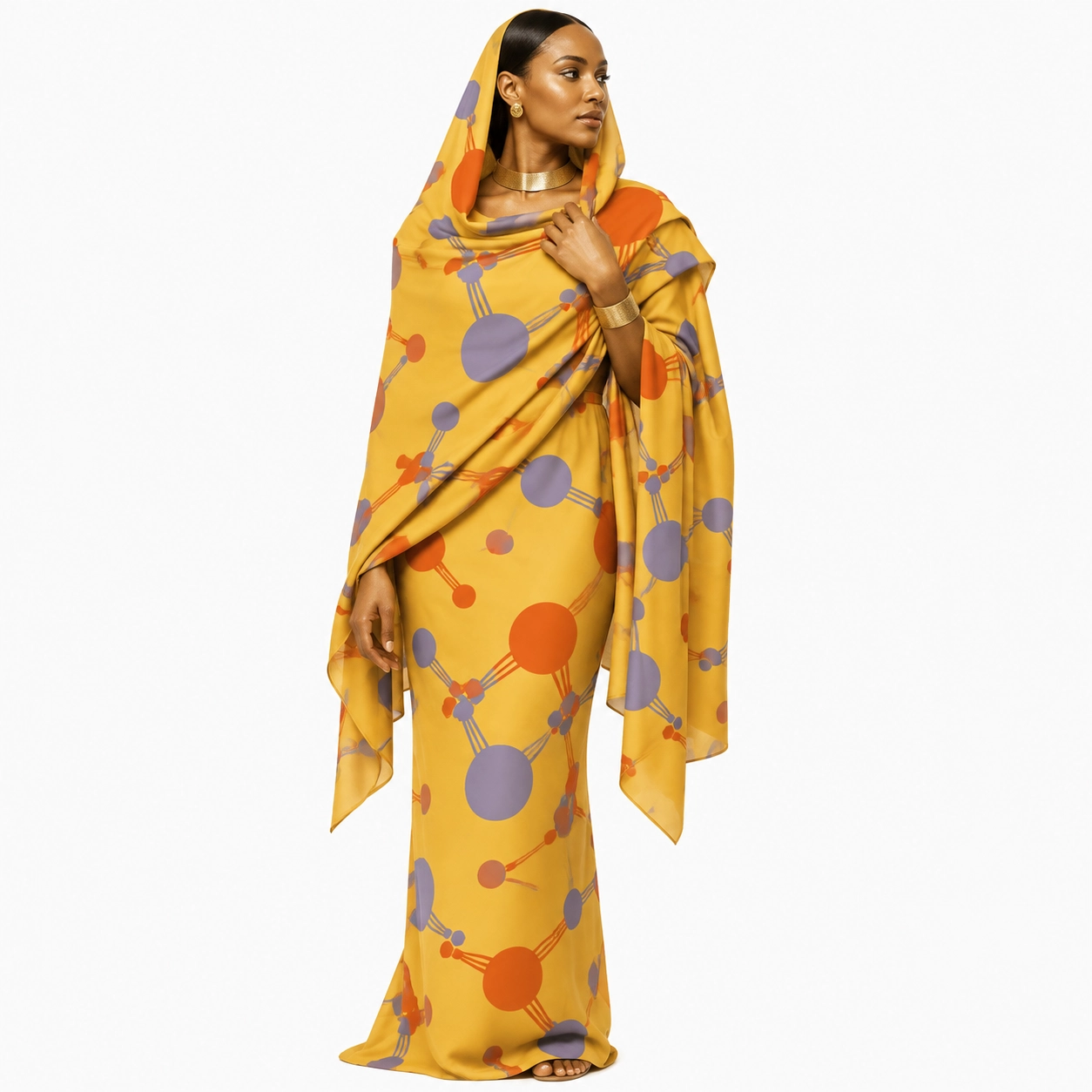
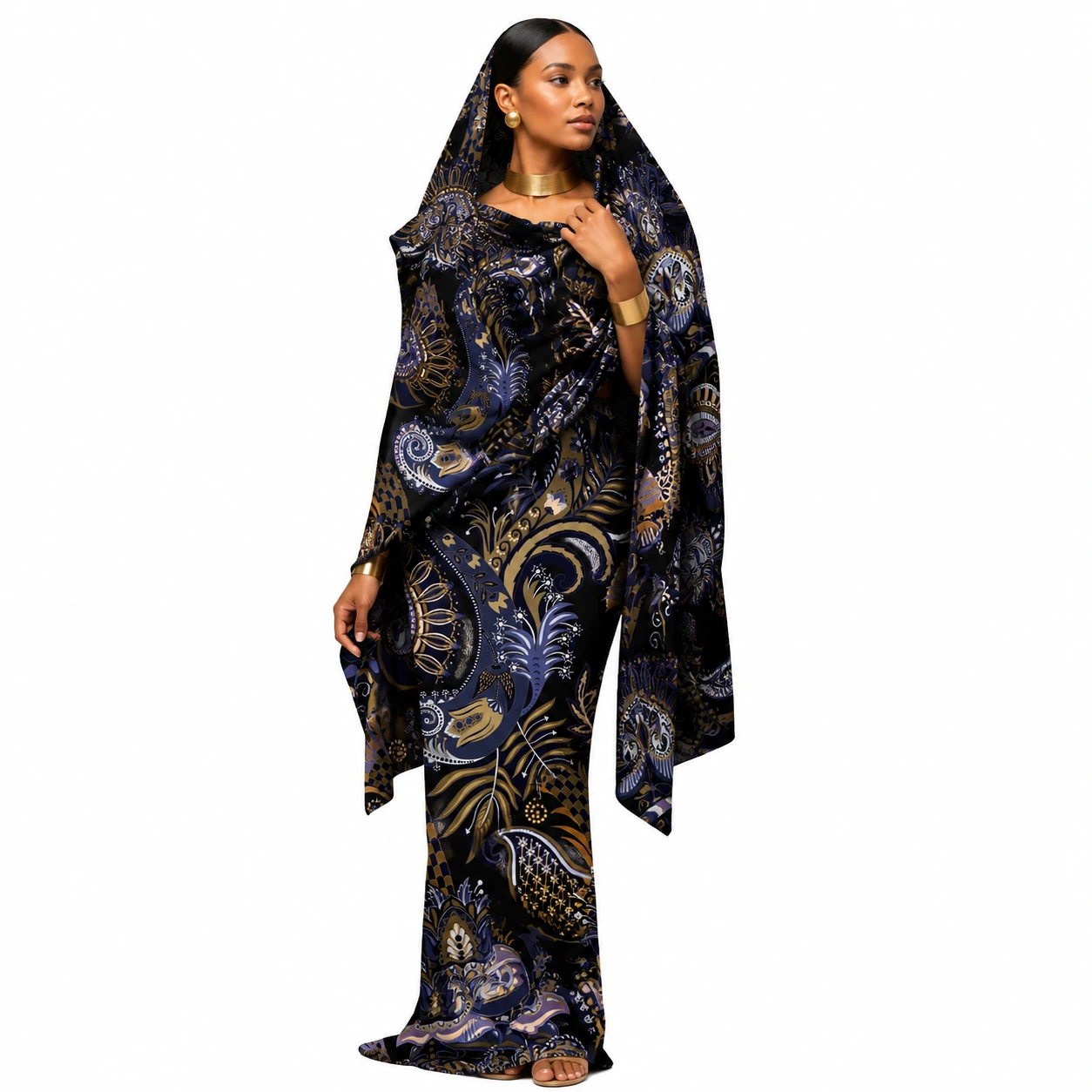
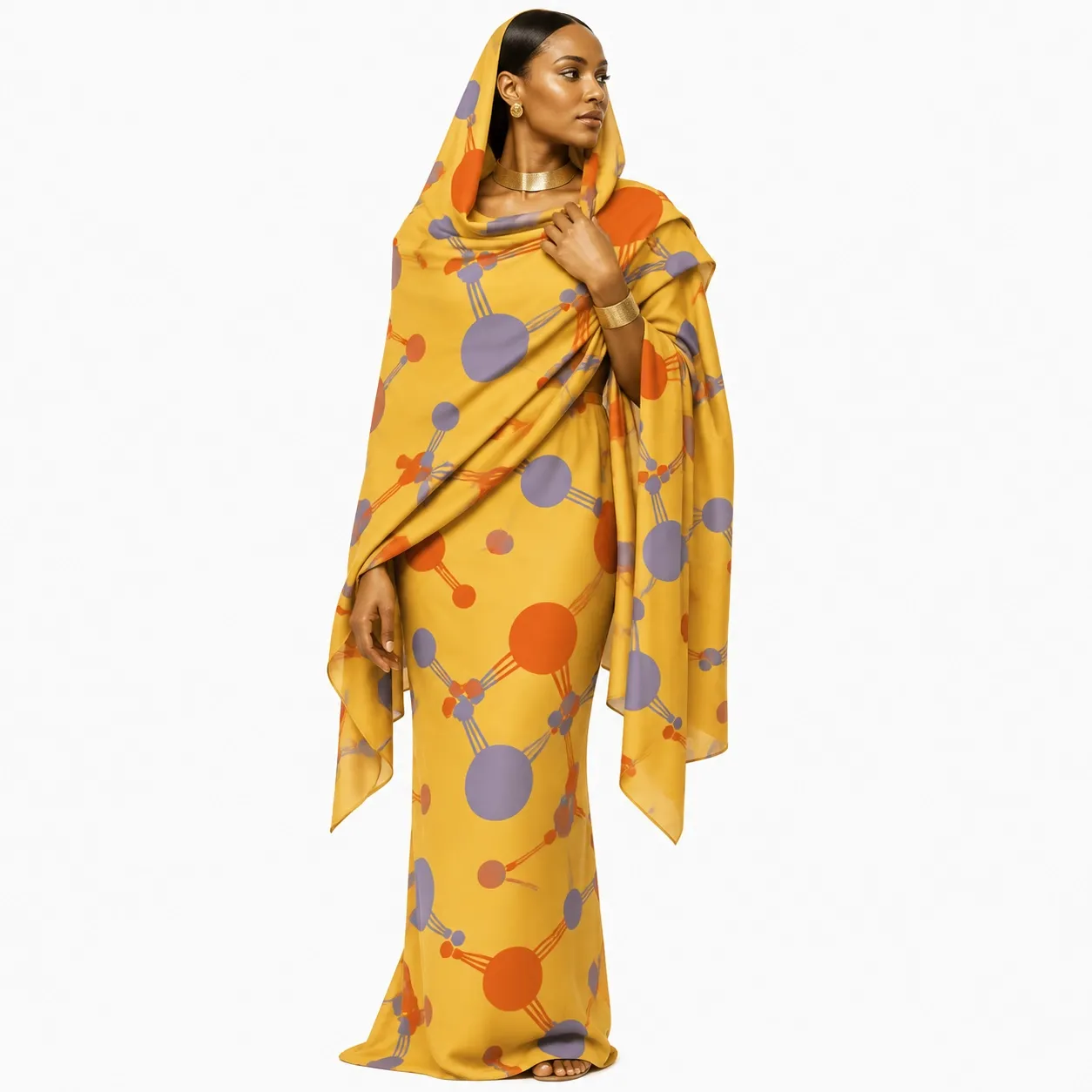
The Sudanese Toub pictures and designs sourcing guide helps buyers separate inspiration images from usable product references. For the boutique collection, go one step further: give every selected design a provisional SKU and one-sentence retail role before asking for a sample.
Choose fabric information customers can understand
Customers may not know technical fabric terms, but the boutique still needs accurate sourcing information. Ask the manufacturer to confirm the material route for the exact item, then translate only verified facts into plain customer language. Do not call a fabric cotton, Swiss, silk, or another premium term because a similar marketplace listing uses that wording.
The cotton voile versus polyester voile guide explains the buyer checks behind material selection. For an online listing, connect those checks to visible and usable details: drape, coverage, surface appearance, complete-piece size, and care information confirmed for the product.
Approve product images and physical samples as separate evidence
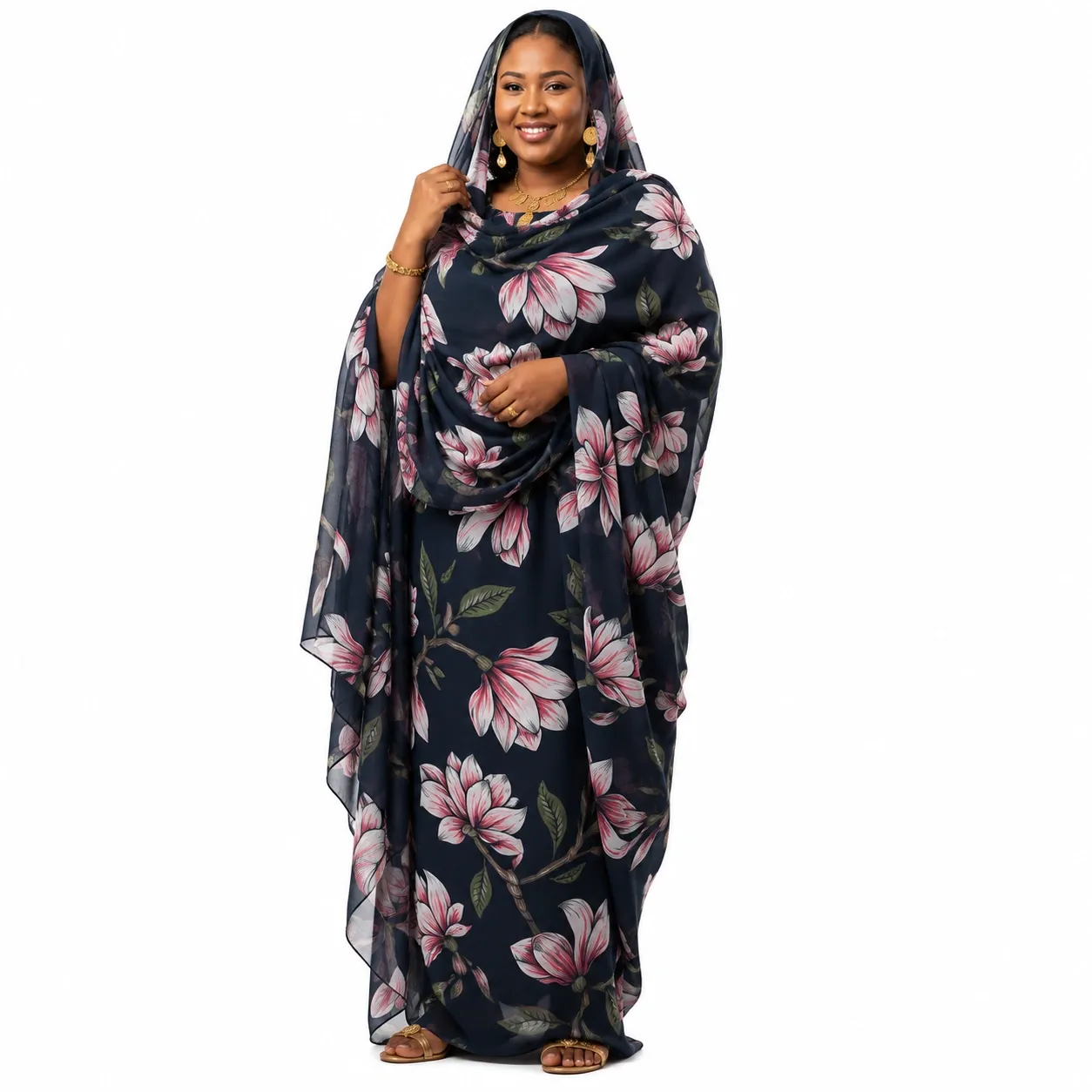
Supplier images are useful for shortlisting, but they do not prove hand feel, opacity, finished measurements, or exact color on the buyer’s screen. Physical samples are necessary for those decisions. At the same time, a sample alone does not show how the product will appear in the boutique’s photography style.
Create two approval tracks. The product track covers fabric, size, color reference, print or finish placement, edges, label, and packing. The content track covers the complete-piece view, draped view, folded view, detail crop, image background, and color consistency across the boutique’s own photos.
Jinlai Textile’s custom Sudanese Toub manufacturing route is relevant when an online boutique needs printed, plain, patterned, or custom-color discussions tied to labels and packaging. The buyer should still create or approve the final listing assets. Jinlai’s role is to confirm the product direction and agreed customization for the sample and order, not to guarantee how a listing will perform.
Create SKU rules that survive reorders
SKU names should be stable, short, and meaningful to the internal team. A simple format can combine a collection code, design number, and color code. Keep marketing names separate. “Desert Rose” may work on the product page, but the purchase order needs a code that cannot be confused with another pink design.
For each SKU, store the approved sample date, image reference, fabric description, finished size, artwork version, label file, packing instruction, and any buyer-approved tolerance or check. When a design changes enough to affect the listing or customer expectation, issue a new SKU or version instead of silently replacing the old one.
Keep private-label packaging focused on identification
Private-label packaging should help the boutique identify, receive, store, and present the product. Confirm which information belongs on the sewn or attached label, which belongs on the individual pack, and which belongs on the outer carton. Country-specific legal requirements should be checked by the importer for the destination market.
Use the existing Sudanese Toub packaging, labels, and retail display guide for detailed packing decisions. In this article’s workflow, the key point is version control: the packaging file named in the purchase order must match the SKU and approved sample.
Send an online-boutique RFQ that connects product and data
The RFQ should request a product quotation and show how the boutique will control its catalog. Include:
1. Target market and sales channels, such as independent website, social commerce, or marketplace store.
2. Buyer type: retailer, importer, distributor, or private-label brand.
3. Provisional SKU for every requested design and color.
4. Product reference, fabric preference, finish, and complete-piece size.
5. Color references, artwork files, and fixed or flexible design points.
6. Sample format and the product checks required before approval.
7. Label artwork, packaging version, barcode field if used, and carton marks.
8. Quantity by SKU for quotation, without assuming a standard MOQ.
9. Destination, requested trade term, and timing target for confirmation.
10. A request to identify every open specification before production.
If private-label development is required, review Jinlai Textile’s OEM and ODM options and attach the same SKU and version rules to the development request. This keeps design work, sample approval, and store data connected.
Use Jinlai Textile for a controlled boutique sourcing workflow
Jinlai Textile can discuss Sudanese Toub options for wholesalers, retailers, importers, and private-label buyers, including applicable fabric routes, printed or plain designs, custom colors, labels, packaging, and sample development. For an online boutique, these capabilities are most useful when every request is attached to a provisional SKU and a clear approval owner.
Prepare a shortlist with design references, target customer, fabric preference, color direction, finished size, branding files, packing needs, and quantity by SKU. Ask Jinlai to separate confirmed facts from details that still depend on sampling. Once the sample is approved, copy the confirmed product information into the boutique’s internal record before writing customer-facing copy. This creates a practical bridge between manufacturing, receiving, ecommerce content, and future reorders.
Conclusion
Sudanese Toub wholesale for online boutiques is a B2B sourcing task, not a consumer shopping guide. The buyer needs to connect each physical sample with a stable SKU, verified product facts, approved images, label and packaging files, and a repeat-order record. “Listing-ready” means the boutique can publish and operate with clear information; it does not transfer merchandising or compliance responsibility to the manufacturer.
Start with a small, distinct collection and document it during sampling. To discuss a boutique or private-label project, send Jinlai Textile your SKU list, references, and sample requirements, together with the destination, quantity by SKU, branding files, and requested timing.
Frequently Asked Questions
Is this type of Sudanese Toub article for B2B buyers or consumers?
It is for B2B buyers: online boutique owners, retail buyers, importers, distributors, private-label brands, and procurement staff. The focus is supplier communication, sampling, SKU control, product information, labeling, packaging, and repeat orders, not where an individual customer should buy or how to wear a Toub.
What makes a Sudanese Toub collection listing-ready?
Each approved item should have a stable SKU, confirmed product facts, a complete-piece sample, clear design and color references, approved images, label and packaging versions, and a record that can be used for receiving and reordering. The boutique still creates the final listing and checks local requirements.
Can an online boutique use supplier photos for its product pages?
Only if the buyer has permission and the images accurately match the approved product. Supplier photos cannot confirm screen color, hand feel, opacity, or measurements. The boutique should verify the physical sample and decide whether its own photography is needed for consistent presentation.
What should a private-label buyer confirm before a repeat order?
Confirm the SKU, approved sample or reference, material description, finished size, artwork and color versions, label file, packaging instruction, destination, and any change since the previous order. If a change affects the listing or customer expectation, approve a new sample or product version.