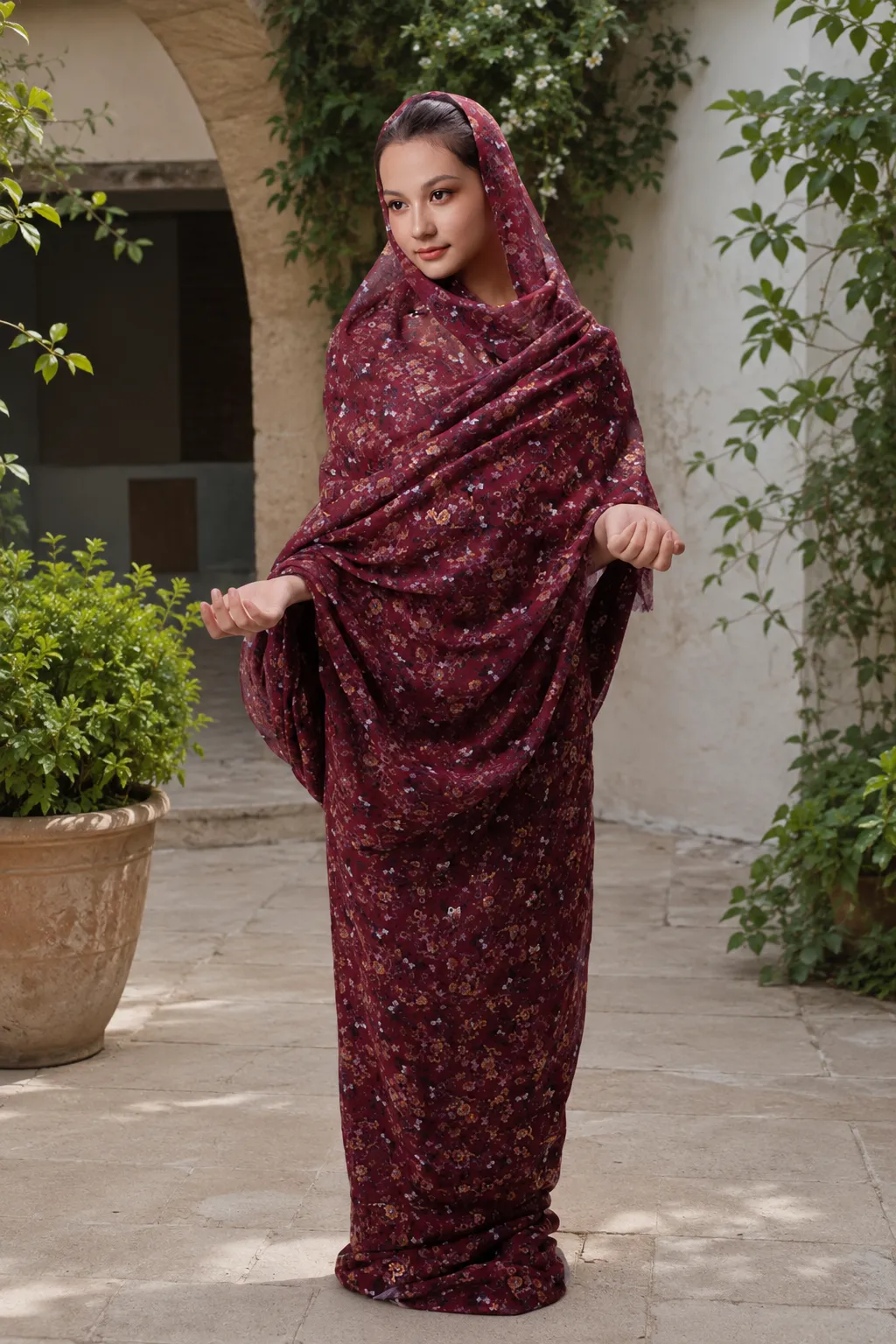
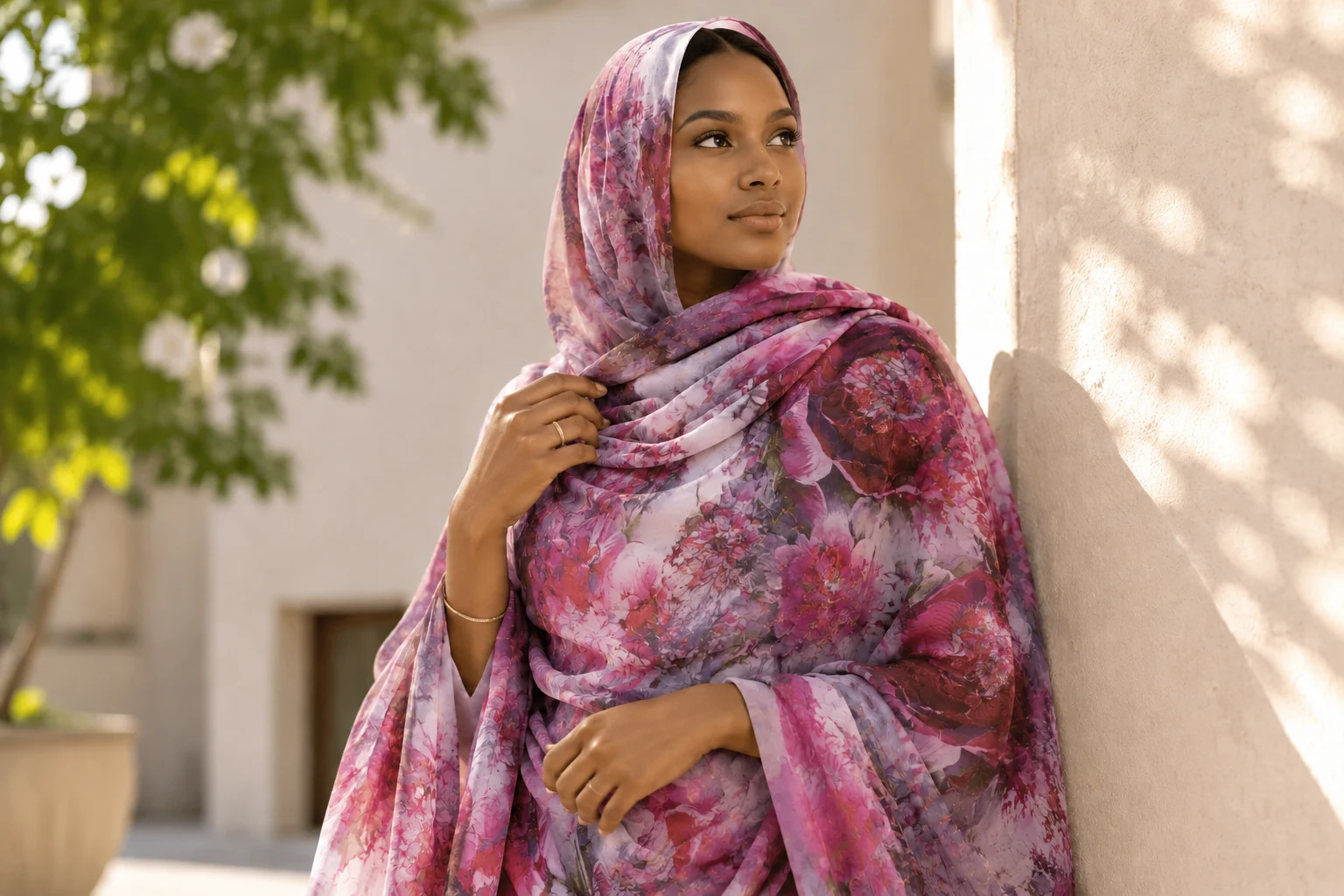
Sudanese Toub Pictures & Designs 2026: Wholesale Sourcing Guide
A wholesale buyer may receive ten Sudanese Toub images from a retailer, sales team, or local distributor and still have no clear idea which ones are worth sampling. One photo shows a strong border. Another has the right color direction but an oversized motif. A third looks attractive only because the image is tightly cropped.
That is where Sudanese Toub pictures become useful as sourcing tools rather than simple inspiration.
For buyers developing a Sudanese Toub wholesale range in 2026, the first job is to separate visual preference from production information. Pictures can help narrow design direction, print scale, border treatment, and overall wrapped appearance. They cannot confirm fabric composition, hand feel, physical opacity, production color, or final specifications.
A good visual shortlist should therefore answer one practical question: which designs are clear enough to move into a sourcing brief?

How to Evaluate Sudanese Toub Pictures for Wholesale Sourcing
A useful image should help a buyer make a specific decision. Full-wrap views show how the design works across the body, while detail shots are better for motifs and borders. Neither view tells the whole story on its own. Before discussing customization or price with a Sudanese Toub supplier, buyers should first identify what each image actually proves and what still needs to be confirmed later.
Assess Full-Wrap Appearance and Visual Balance
Start with a full-wrap view whenever possible.
Look at how the main colors are distributed, where the larger motifs remain visible after folding, and whether the design still feels balanced from a normal viewing distance. A close-up may make one section look striking while hiding how dense the print becomes across the full piece.
This matters when several Sudanese Toub designs are being considered for one collection. The strongest close-up is not always the strongest finished Toub.
For the first shortlist, judge the complete visual composition before focusing on smaller decorative details.
Evaluate Print Scale and Border Placement
Print scale is easy to misread on a screen. A small repeat can look much larger in a cropped photo, while a bold floral or abstract motif may become visually heavy once repeated across the full wrap.
Borders need similar attention. Buyers should check whether the border remains visible after wrapping and whether its placement supports the intended look rather than competing with the central design.
At this stage, a picture is still a selection reference. It is not an approved print layout.
What Product Images Cannot Verify in a Wholesale Sourcing Decision
Good Sudanese Toub pictures can remove weak options early, but visual screening has limits. Lighting, camera exposure, editing, screen settings, background color, and styling can all change how a product appears online. Recognizing those limits actually makes images more useful: buyers can use them confidently for design selection without asking a photograph to provide technical information it cannot show.
Verify Fabric Composition and Hand Feel Separately
A photograph cannot confirm the composition of Sudanese Toub fabric, and it cannot communicate hand feel.
For Jinlai Textile Toub projects, the relevant material routes are cotton voile and polyester voile. The selected material should be written into the sourcing brief rather than assumed from appearance.
Two fabrics can photograph similarly under soft lighting and still feel different when handled or wrapped. Material selection therefore belongs in the product specification and sample discussion, not in the visual shortlist.
Confirm Opacity, Color Reference, and Finished Specifications
Opacity is also difficult to judge from an image. Lighting, background and overlapping layers can change the apparent coverage.
Color has the same problem. An image can communicate a useful color direction, but it should not become the production color reference by default. Finished dimensions and other measurable requirements also need written confirmation.
Once these technical points are separated from the visual decision, buyers can return to what product images do particularly well: comparing design options.

How to Compare Sudanese Toub Designs for Wholesale Shortlisting
When several Sudanese Toub designs look promising, the buyer needs to know why one should move forward and another should not. Comparing completely unrelated styles often produces more noise than useful information. A stronger shortlist keeps most variables reasonably stable and changes one main visual feature at a time. This makes the decision easier to explain internally and gives the supplier a clearer direction later.
Compare One Design Variable at a Time
Suppose a buyer is comparing three floral Toub designs.
If one changes color, motif size, border treatment and print density all at once, the comparison does not reveal much about actual preference.
A cleaner comparison might use similar layouts in two color families, or the same color direction with different motif scales. Buyers can then see whether the real preference is for the palette, the print density, or the pattern itself.
For wholesalers testing a new assortment, that distinction matters. It prevents the sample stage from becoming a collection of unrelated ideas.
Distinguish Inspiration Images From Product References
An inspiration image communicates a direction. A product reference points to an existing style. A Sudanese Toub drawing may show a layout idea while color, material, motif scale and finishing remain open.
Mark the role of each image clearly.
“Use this image for color direction” gives the supplier something practical to work with. So does “keep the border concept, but change the center motif.”
Sending several pictures with no explanation usually creates extra questions before development even starts.
Build a Qualified Visual Shortlist Before Sampling
Not every attractive picture should move into sampling. Too many variations make evaluation slower and often leave the buying team comparing products that were never intended to serve the same market position. Before requesting development, buyers should know what they like about each design, what still needs technical confirmation, and why the style belongs in the planned range.
Use a Visual Shortlist Matrix
Visual Check | Can a Picture Help? | Next Buying Step |
Overall design | Yes | Shortlist the style |
Print scale | Mostly | Confirm on the full piece |
Border placement | Yes | Confirm final layout |
Material composition | No | State in specification |
Hand feel | No | Check physical sample |
Opacity | Limited | Check physical sample |
Production color | Limited | Approve color reference |
The table is simple, but that is the point. A buyer should be able to explain why a design is still on the list without turning the shortlist into a technical file.
A shortlisted picture is only a visual reference. The next step is to add the commercial information that the image cannot provide.
Convert a Reference Image Into a Sudanese Toub Sourcing Brief
A Sudanese Toub manufacturer needs more than a picture to assess a project properly. The image may communicate style direction, but it does not show required quantity, material, finished specifications, packaging needs, or which design elements are fixed. A concise sourcing brief closes those gaps and gives both sides a better basis for discussing feasibility and quotation.
Define Fixed and Flexible Design Elements
Separate the parts that should stay close to the reference from those that can change during development.
The fixed elements may include:
· color direction;
· motif scale;
· border concept;
· general print density.
Other details can remain open until the design is developed.
This is more precise than treating a reference image as a ready-to-print file. Once the design moves from visual selection into technical print control, the Sudanese Toub Custom Print Approval Guide covers artwork scale, placement, color reference and sample approval as the next stage.
Add the Commercial Details Needed for an RFQ
The sourcing brief should state the preferred material, required size, approximate quantity per design, whether the buyer wants an existing or custom pattern, packaging requirements and destination market.
That changes the conversation from:
“Can you make something like this?”
to:
“Can you develop this design direction for this material, order quantity and market?”
That second question is much closer to a workable B2B inquiry.
Convert the Visual Shortlist Into a Wholesale RFQ
By this stage, the buyer should have fewer images, clearer design priorities, and the information that pictures could not provide. The RFQ can now connect each selected reference with product and commercial requirements. This reduces unnecessary back-and-forth and gives the supplier a cleaner basis for discussing development, sampling and quotation.
Prepare One Clear RFQ for Each Selected Design
Give each selected style a simple reference code or name. Attach the relevant image and add the material, size, quantity, customization points, packaging requirement and destination.
If one picture is being used only for its border, say so. If another is purely a color reference, mark that too. Small comments like these save surprisingly long email chains.
Buyers who need broader customization support can review Jinlai Textile's customization and service options when preparing a new Toub project. Keep the initial inquiry focused on the selected design references and the information needed to evaluate the order.
Conclusion
A strong visual sourcing process does not begin by asking a supplier to reproduce every image a buyer likes. It begins by deciding what each image is useful for.
Use full-wrap pictures to judge overall balance. Use detail images to compare motifs and borders. Use inspiration references to communicate direction. Then move the selected designs into a written brief that confirms material, size, quantity, packaging and the elements that should remain fixed.
That approach gives Sudanese Toub wholesale buyers a cleaner path from product discovery to quotation, while leaving technical approval for the stage where it actually belongs.
If you already have a shortlist of Sudanese Toub pictures or designs, send the references together with your material, quantity and customization requirements through the Jinlai Textile inquiry page to discuss the project.
FAQ
Q1: What Sudanese Toub pictures are most useful for wholesale sourcing?
A: Full-wrap photos, clear product views and print close-ups are the most useful. Full-wrap images help buyers judge overall visual balance, while close-ups are better for motif and border details.
Q2: Can a Sudanese Toub manufacturer work from a reference picture?
A: A reference picture can communicate color direction, motif scale, border ideas and overall design intent. Material, size, quantity and other production requirements still need to be stated separately.
Q3: What should buyers check in Sudanese Toub pictures before sourcing?
A: Check full-wrap balance, print density, motif scale, border placement and color direction. Use the picture for shortlisting rather than as final product approval.
Q4: Can a photo confirm Sudanese Toub fabric composition, color and opacity?
A: No. Fabric composition, hand feel, production color and physical opacity should be confirmed through the product specification and physical sample.
Q5: What should be sent with a picture when requesting a Sudanese Toub wholesale quote?
A: Send the reference image together with the preferred material, required size, quantity by design, customization requirements, packaging needs and destination market.