How to Compare Sudanese Toub Wholesale Quotes by Meter and by Piece
A quotation for 150 meters and one for 30 pieces may cover the same shop order. They may also leave the wholesaler with different amounts of work. To compare Sudanese Toub wholesale pricing, the buyer first works out how many full pieces the rolls can yield, then prices any cutting, edge work or packing required to bring both offers to the same point. Only then does the difference per piece mean anything.
The example below follows a UAE wholesaler ordering 30 Toubs for retail. There is no need to assume a standard length for every Toub. This order has its own agreed size and finish, and both offers have to meet them.
What Exactly Is Being Bought?
One quote may describe fabric as meters on a roll. Another may use “piece” for an individual Toub or a longer trade cut that still needs dividing. The buyer needs the dimensions attached to the quantity. A carton containing 30 lengths could meet the piece count while leaving all 30 to be edged and folded. If the shops take stock in individual packs, that work needs to be accounted for too.
Jinlai Textile is a manufacturer and wholesale supplier of Sudanese Toub. Its Sudanese Toub sourcing options cover ready designs, fabric supply and custom development. A buyer planning to cut locally can ask about usable roll lengths and widths for a selected print. A distributor supplying shops can specify the finished dimensions, edge work and packing needed for each piece.
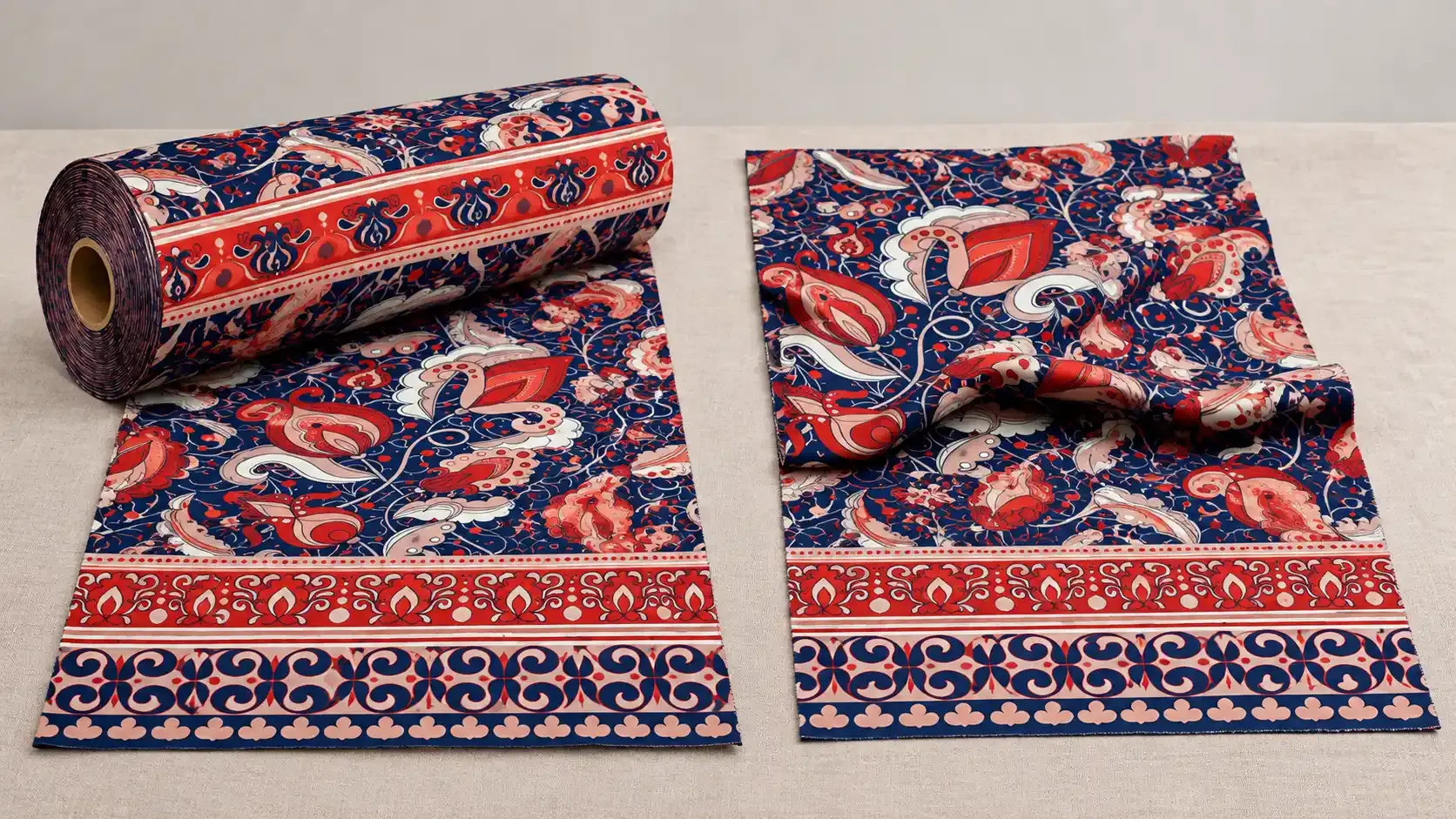
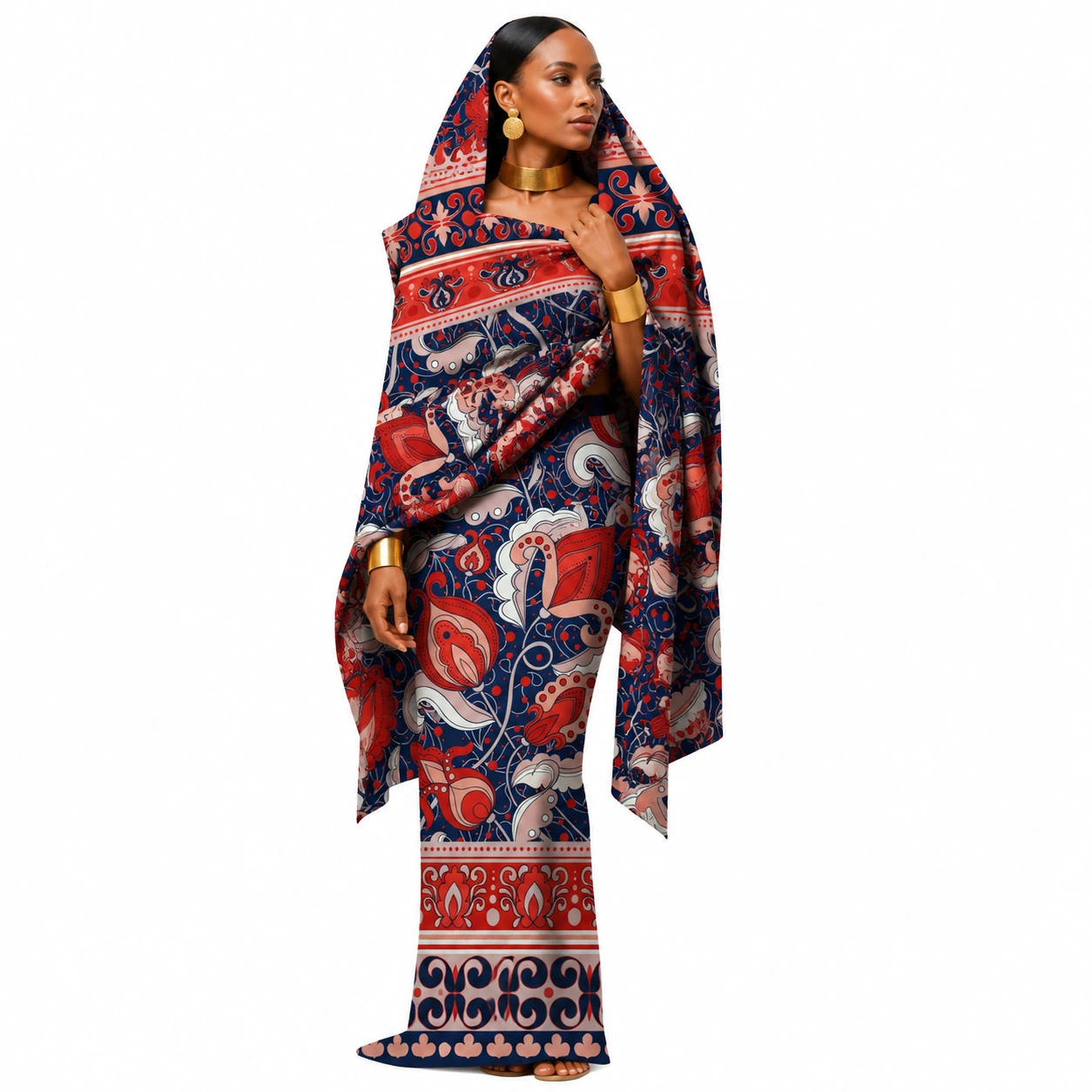
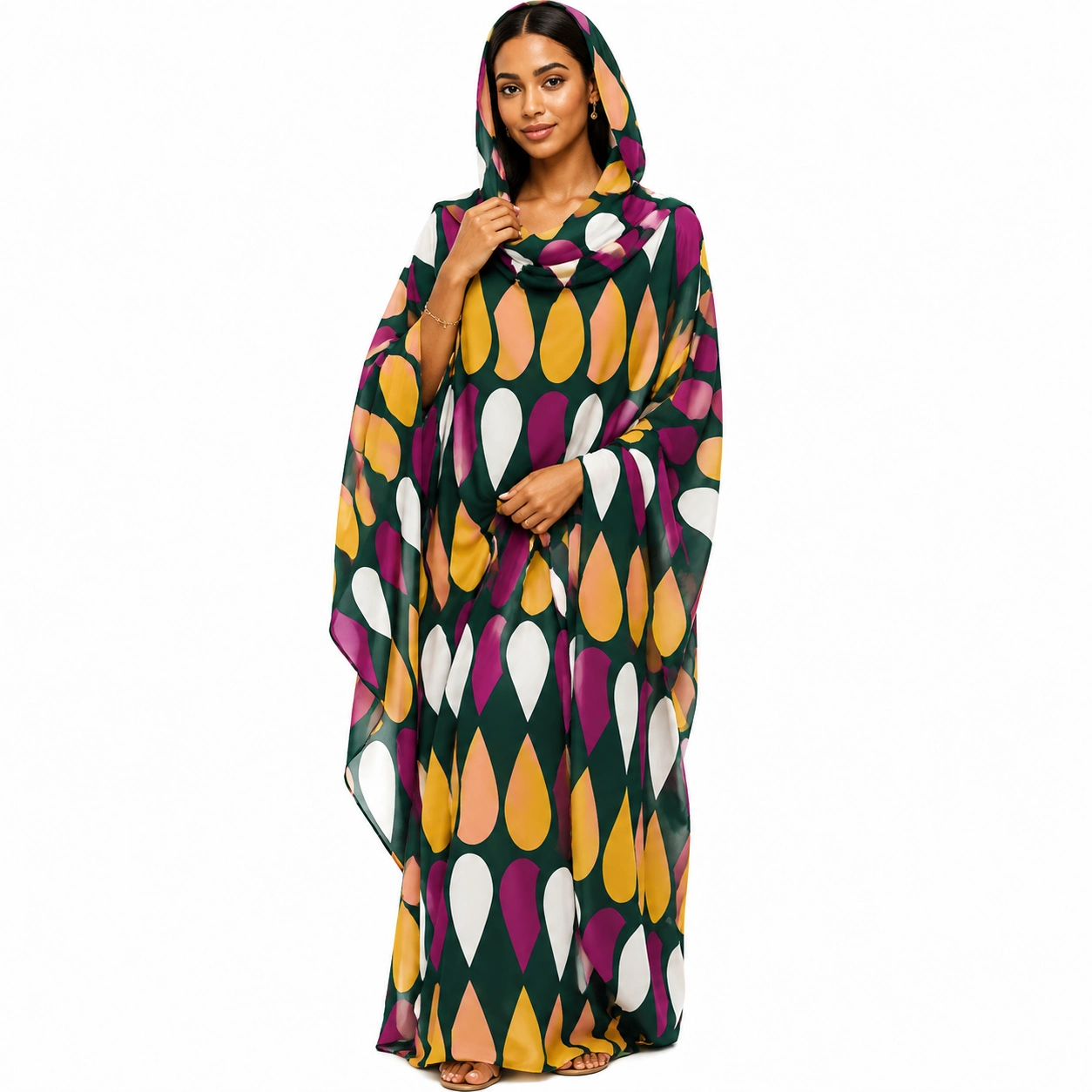
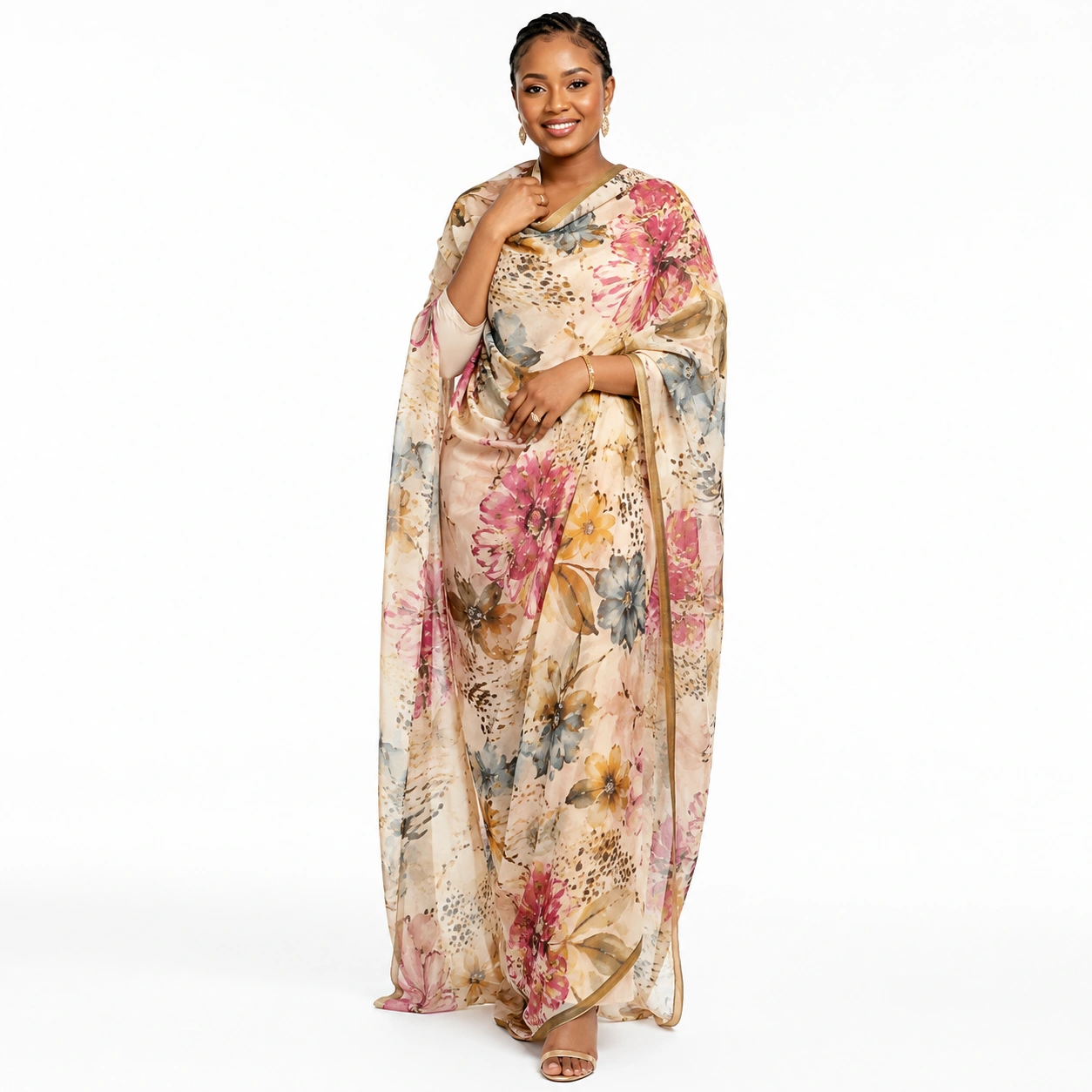
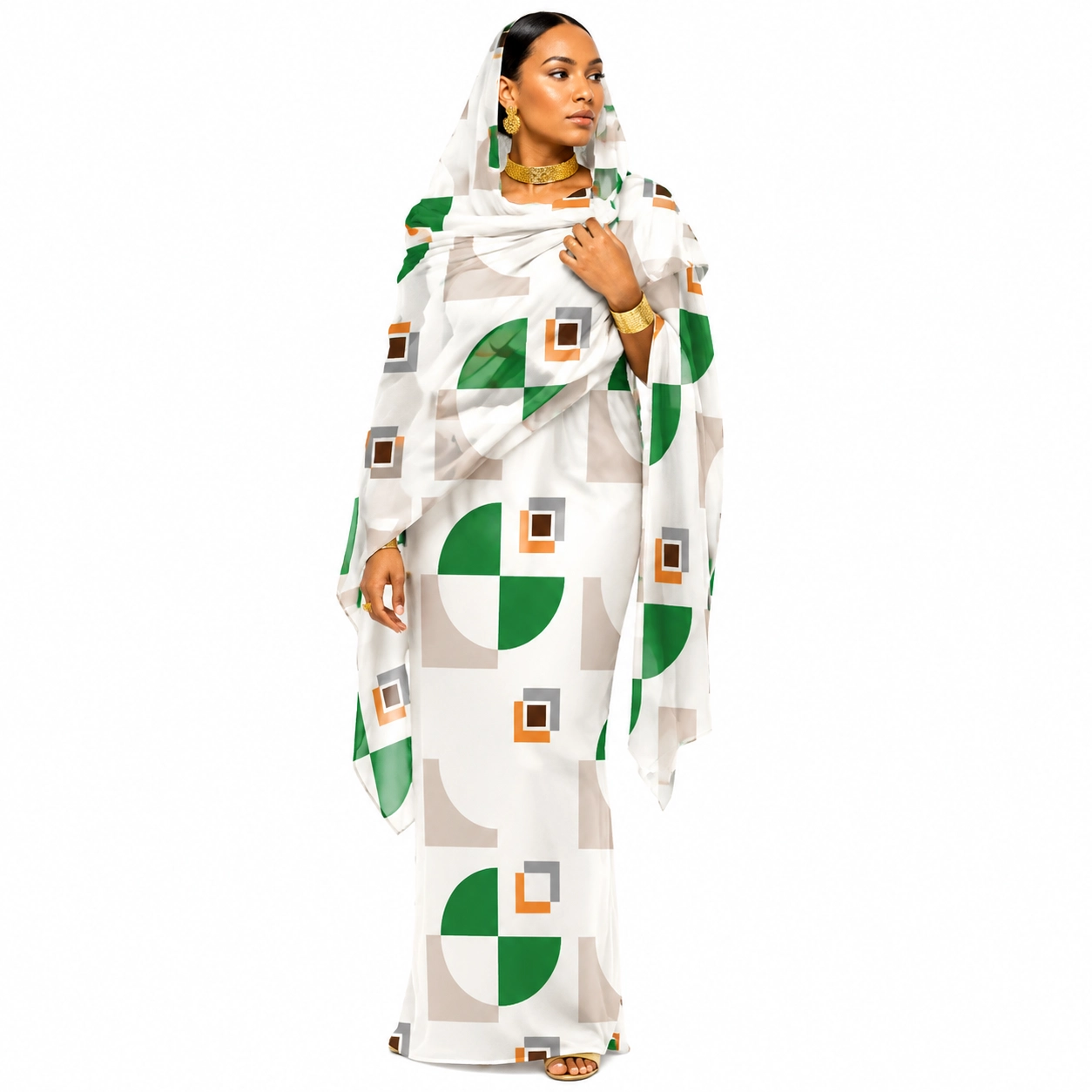
Illustration of roll fabric and an individually cut length. Availability by supply format depends on the selected design.
How Much of the Roll Can Become a Toub?
Consider three 50-meter rolls billed in full. The cutter can use 49.5 meters on each roll, and the agreed cutting length is 4.55 meters per Toub, including an allowance for finishing. Those are hypothetical figures for the order, with 150 meters on the invoice and 148.5 meters available to cut.
Start the count at each roll
Ten cuts take 45.5 meters. That leaves four meters at the end of each roll. There are three such ends, but none is long enough for an eleventh piece. Dividing 148.5 by 4.55 in a single calculation suggests 32 pieces. The cutter gets 30 because each piece has to come out of one continuous length.
The useful follow-up on a roll quote is the amount of uninterrupted cloth. Suppose one roll has the same 49.5 usable meters, but a fault divides it into 22.70 and 26.80. The first section is five centimetres short of a fifth cut, so it yields four. The other section yields five. The same total length now gives nine pieces from that roll.
The cutting allowance belongs in the 4.55-meter figure for this example. The store's finished length and the cutter's starting length are separate measurements. Counting with the finished length may promise pieces that come up short after edge work. Adding an allowance to a cut length that already includes it would understate the available output.
Check the width and the print before counting
The Sudanese Toub fabric specification guide explains the dimensions buyers need to confirm before approving fabric. A roll can have enough length and still leave too little usable width after trimming. A border can also change the cut count. If the design needs the border at the end of each finished Toub, a cut may have to start at a particular point in the repeat. The resulting yield may differ from the simple length calculation.
The Price Difference on the 30-Piece Order
The example assumes the same finished size and delivery point for both offers. The cutter charges USD 1.50 for each usable piece. The roll supplier charges USD 2 per billed meter. The piece supplier quotes USD 11.20 per piece with the required preparation included.
Quote basis | Fabric or pieces | Local prep | Cost per piece |
Three rolls | USD 300 | USD 45 | USD 11.50 |
30 ready cuts | USD 336 | Included | USD 11.20 |
The ready cuts cost USD 9 less on those terms. That leaves USD 0.30 per piece before the saving disappears. A separate packing charge of USD 0.40 takes the ready-cut price to USD 11.60, or USD 348 for the order. With all 30 cuts available, the roll option would then cost USD 3 less.
What happens if one cut is lost?
The fabric bill remains USD 300 if the cutting room gets 29 pieces. Preparation falls to USD 43.50, which brings the unit cost to roughly USD 11.84. The shop still needs another Toub. Compared with the USD 348 packed-piece offer, the buyer would have USD 4.50 left to source the missing piece and finish it. A matching print and colourway also have to be available before that figure is of any use.
If another full roll is the only way to recover the missing piece, the buyer pays for an entire additional length. Pieces beyond the 30-unit order may still have value if the stores can sell them later. The buying sheet can record the full purchase cost and list the surplus separately instead of treating every extra piece as committed stock.
The local cutting fee also needs a unit. In this example, the cutter charges for each usable piece. If the cutter instead charges USD 45 for the job regardless of yield, the buyer pays USD 345 even when only 29 pieces are usable. The cost rises to about USD 11.90 per piece before finding the one still due to the shop.
What the Supplier Needs to Confirm
The roll quote needs the billed length and the usable dimensions on each roll. It also needs any restrictions on where the cutter starts. The cut-piece quote needs the dimensions after edge work and the number of individual pieces in the pack. Where either offer is missing a figure, the buyer can keep the comparison provisional. A nominal length or a pack description can be enough to start the enquiry, but the confirmed unit is what belongs on the order.
The custom Sudanese Toub options at Jinlai Textile allow a buyer to describe the size, pattern and packing together. For a print with a border, the enquiry can show which end of the piece needs it. A sample of the proposed full cut gives the buyer a way to check placement. A swatch can show the print while leaving the position of that border unanswered.
Compare Prices at the Same Delivery Point
Both offers should also stop at the same place. A factory price may still leave the wholesaler to arrange delivery to the UAE warehouse. After comparing the product and preparation costs, the buyer can apply the Sudanese Toub landed-cost guide to check which transport and import charges belong in each offer.
Conclusion
A per-meter rate turns into a usable buying figure only after the cutter has a credible count of full pieces. A per-piece rate needs a clear description of the finished unit. In the example, the USD 9 gap is small enough for packing or one missed cut to change the decision. Putting both offers on the same basis gives the buyer a price that can actually be used for the shop order.
Wholesale buyers can ask Jinlai Textile for a comparable quote with the desired sellable quantity, the finished dimensions and the print reference. A buyer considering rolls can add what the cutting room can handle locally. If the store needs folded, individually packed pieces, that belongs in the request so Jinlai Textile can confirm which work is included.
Frequently Asked Questions
Is a five-yard piece the same length as a 4.5-meter piece?
Five yards equals 4.572 meters. There is a difference of 7.2 centimetres. If a shop sets a minimum finished length, the buyer still has to establish whether the length on each quotation is measured before or after trimming and edge work.
Can offcuts count towards the order?
A remnant can count as a Toub only if it meets the agreed length, width and print placement. The buyer may be able to sell some remnants separately. They can be recorded as a separate item without increasing the number of full pieces shown on the buying sheet.